Looking Crossways
An interview with artist Selina Trepp
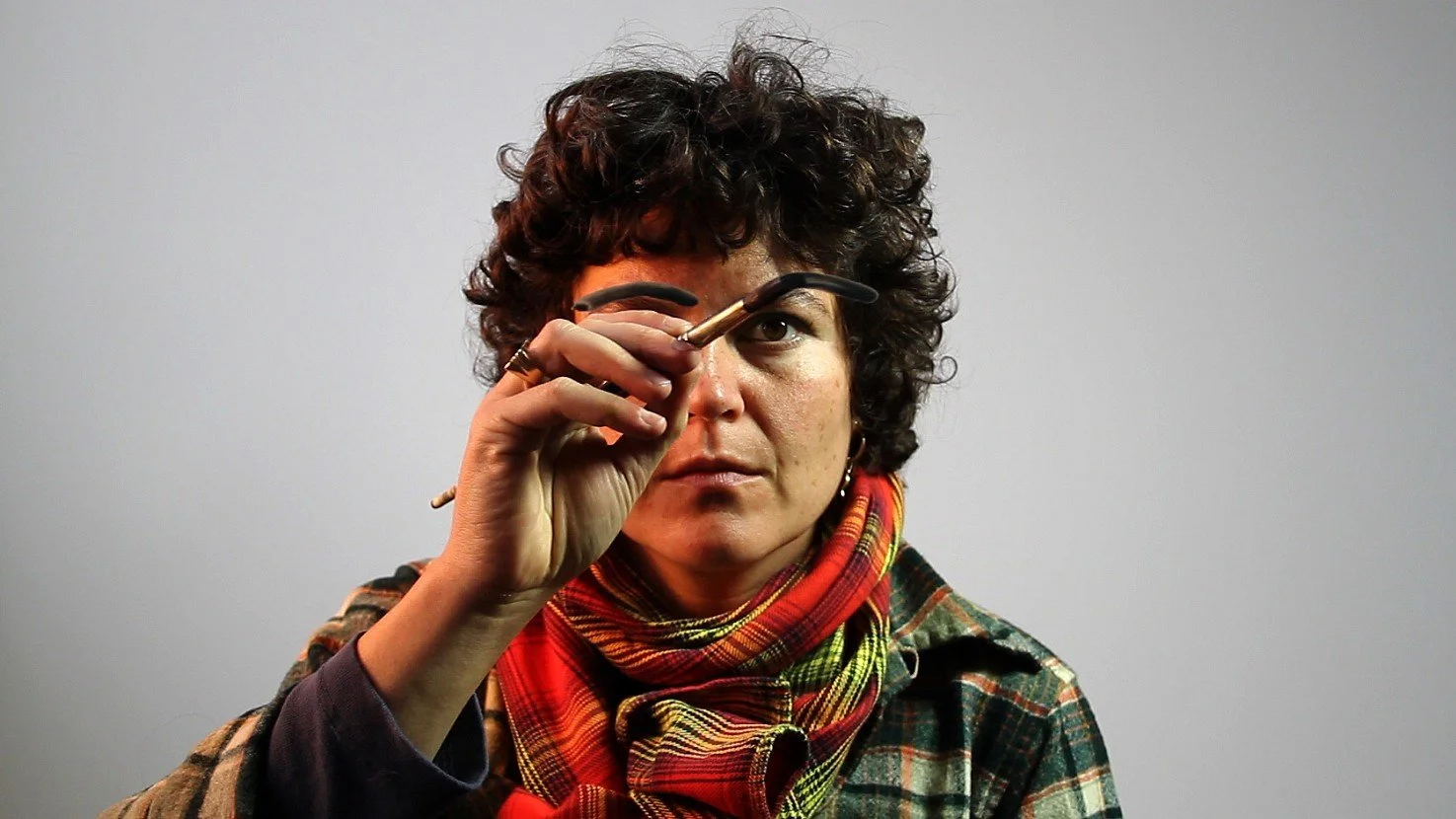
Still from Thinking about Inheritance
“I have no desire to be an insider. True power lies in being on the outside. That’s the position that gives a fuller perspective.” - Selina Trepp
To understand Selina Trepp’s work is to understand the strength of an expansive, outsider perspective. A perspective that looks inward and outward, past and present, all at once. Shaped by her upbringing, an acute awareness of the sociopolitical landscape, and her everyday reality of navigating modern life, she treats creative practice as an essential framework for making sense of the world.
Living in Chicago alongside her husband, musician Dan Bitney of Tortoise, and their child, Max, she maintains a practice where daily life and art seamlessly blend together. Moving fluidly across painting, sculpture, animation, and live audiovisual sets in the experimental music scene, her work stays rooted in play, freedom, and constant experimentation. In this interview for Quickest Flip, Trepp opens up about her artistic heritage and creative process.
Q+A
What are some of your biggest inspirations? I am particularly interested in your past inspirations and how they differ from where & what you are currently responding to.
I’m still, or in some cases, again, engaged with many of the same artists and many of the same ideas that I’ve been pondering since the beginning.
Art has been with me always. My family are/were artists. For the first half of my childhood we lived communally with other artists, art was just a normal part of our life, art was how we lived.
I grew up outside of Zurich in Switzerland during the era of Harald Szemann as head of the Kunsthaus there, his form of curating as Gesamt Kunstwerk mixing canon artists with outsider artists was formative for me. His exhibitions showed me how the exhibition itself could be a work of art by contextualizing things in a way that added up, that experience influenced the breadth of what I understand as art to be to this day.
My childhood home was tv free. Instead we went to the movies a lot. When I was a small kid I saw the film “Le Mystère de Picasso” which is a feature length film in which we see him paint, but actually you never see him, only the paintings that emerge as he paints. I was completely enthralled and went back to see this film many times growing up. I see the influence of that film in my work to this day.
In undergrad a long time ago I took a history of animation class that introduced me to the massive and diverse body of work by Harry Smith, and early European abstract animators who were working in the realm of visual music, that influenced me profoundly as I started thinking about the potential animation could have for me, initially especially when it comes to performance and the work I do in the music world.
Reality's Truth, oil on glass kinetic sculpture stop motion 4k video, 2025
I was early on very inspired by Dadaism, Fluxus and 1990’s relational aesthetics.
The idea of art as an immaterial experience still appeals to me greatly. Taking art out of the realm of commodity to this day is a thing I am invested in. This is impractical.
Letting my politics and ethics guide my art is important to me on the level of production, one could think of it as a version of relational aesthetics where rather than illustrating my ideas, I employ them in my production. I often implement these concepts outside the institutional realm, primarily in how I collaborate with people and by being considered in the ways of how my work can exist in the world in a direct way.
My first profound independent art discovery was James Turell- I encountered his Lightrooms by chance in NYC at MOMA when I was twelve. My heart and mind were blown by that experience that words couldn’t express, only art. That’s when I knew that I would be an artist.
Another big influence is Niki de Saint Phalle. I love her work, how it is all encompassing, the juiciness of it, how accessible it is and also how she conducted the business of her practice. I was very inspired by how she figured out the financing of her projects, her independence and how her life and art were one.
In German people like me are described as “quer” which translated in English means “crossways”.
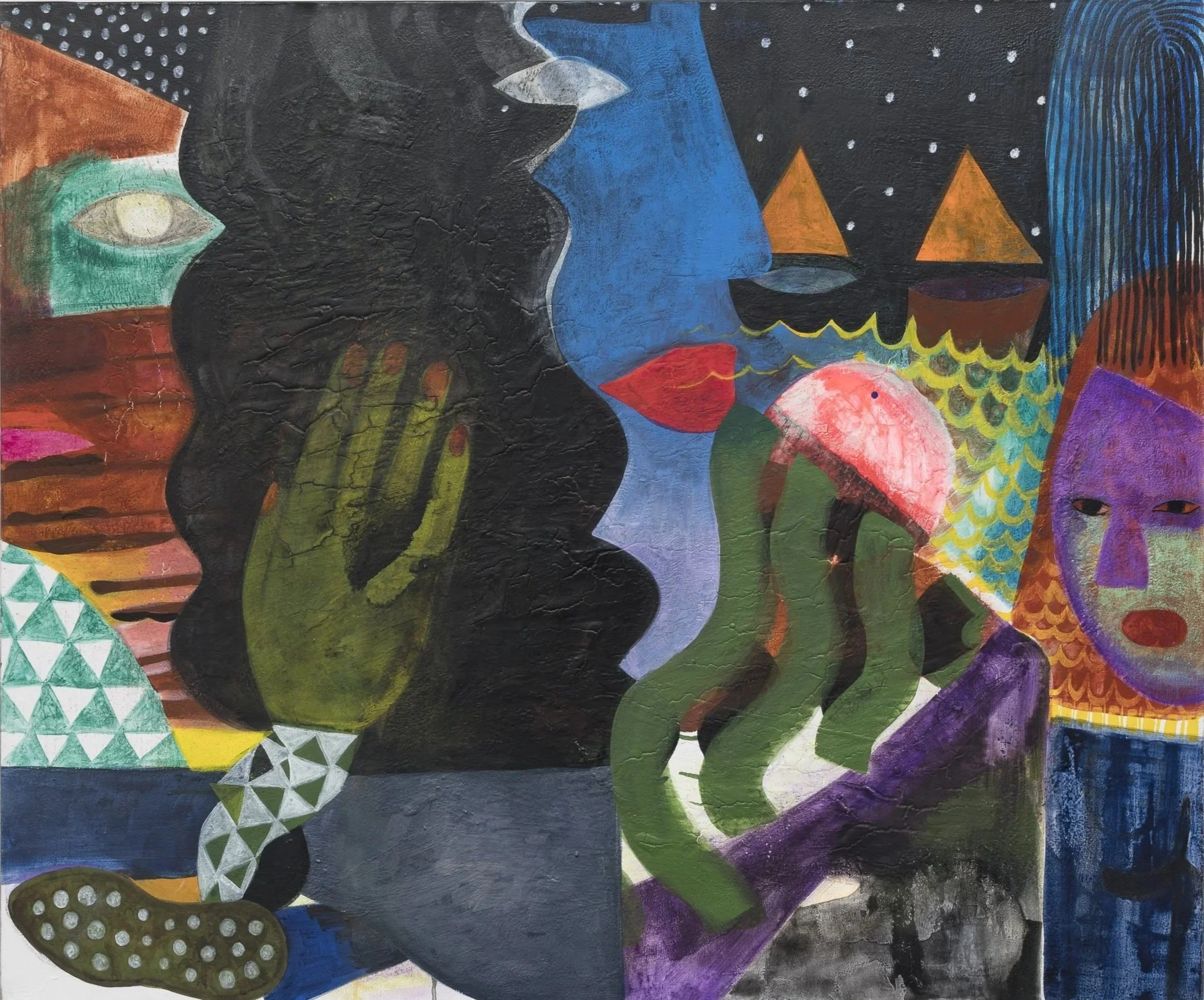
Nightlife, acrylic, chalk, india ink, guache on canvas, 41 in x 49 in x 2 in, 2020
As a multimedia artist, is there a medium you gravitate towards: for specific ideas or functions? Or is there a medium currently speaking to you.
I’m not completely wed to any medium. What I do depends on what I need personally. My work first of all has to serve me, I make what I want to see, how I want to feel and how I want to work. And that changes. Currently I’m in a transitional phase. I’m coming off of having made a very difficult animation for 18 months, difficult but very satisfying. After that I needed flow and ease, and so the past 9 months have been completely dedicated to only painting and drawing and a little sculpture. Now I’m starting to feel some animation ideas and desires percolate again, so I’ll be animating again soon.
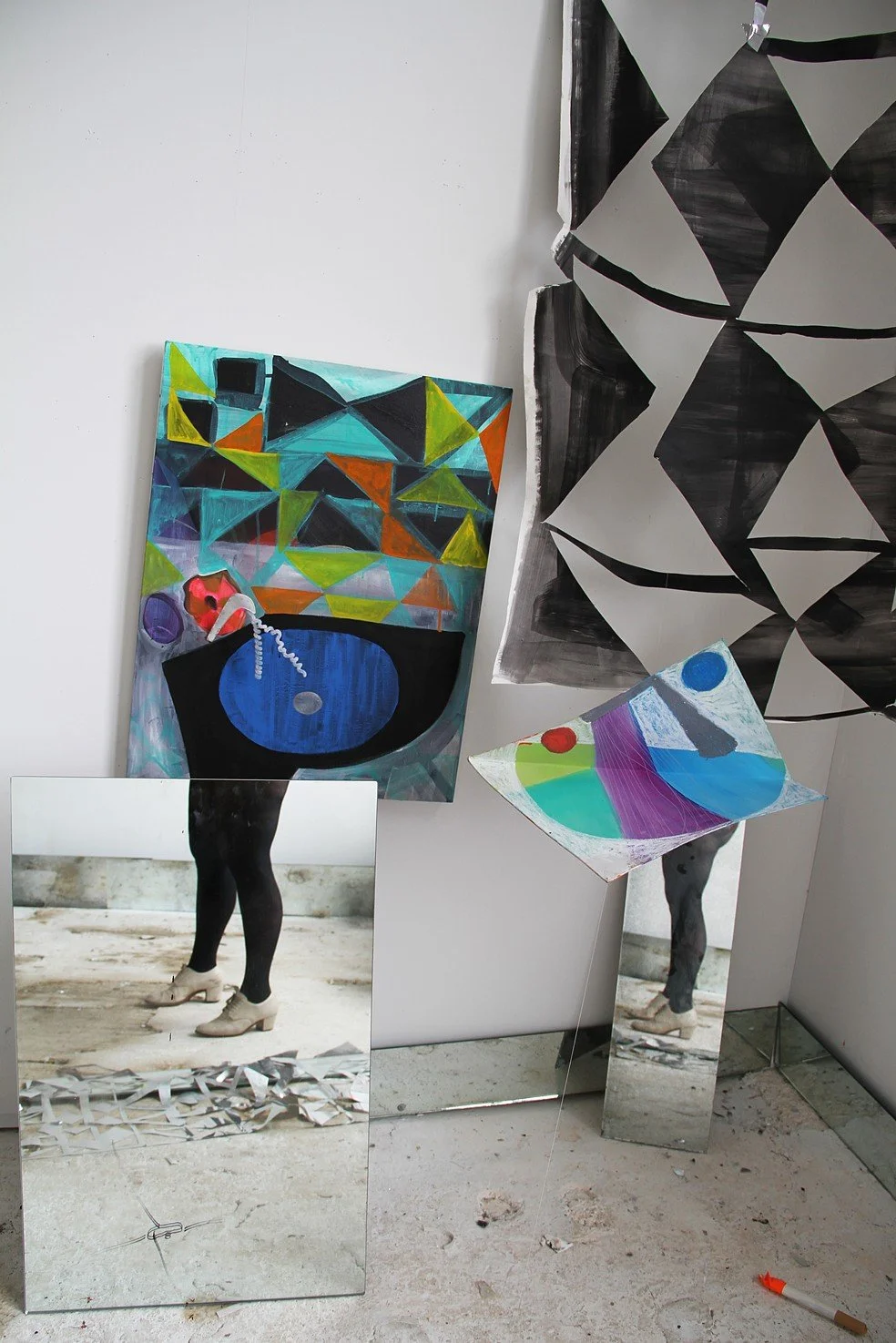
Sinks, archival inkjet, 29 x 40 inches, 2015
What does “balance” in art look like for you? As an artist who enjoys material reuse.
My balance is about remaining committed to conceptual and intuitive processes equally and simultaneously. I want there to be space for serendipity as well as for conscious directionality in my work. In addition to that what shapes my work is that I care deeply about ethics on every level, this is expressed in my material choices, in how I interact with collaborators and where I exhibit. Everything I do is also considered through the lens of ethics and a desire for my work to be accessible to all in every way.
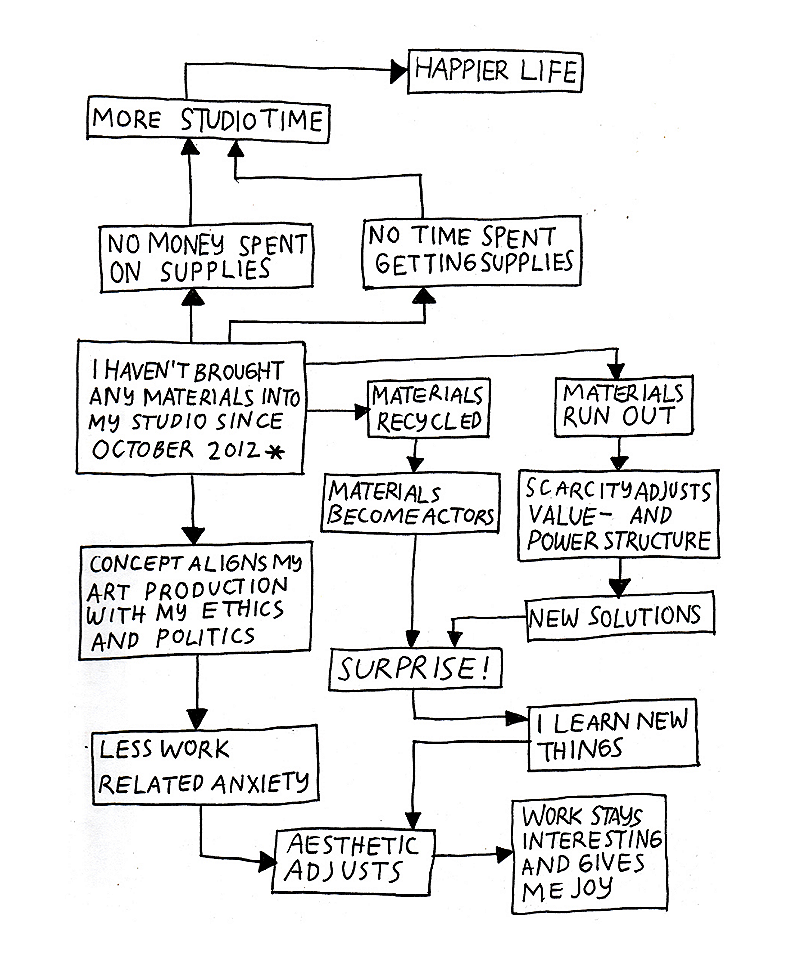
Page from my artist statement/coloring book
Does your music choice influence your process or do you have an emotional modality you like to sink into?
I rarely listen to music when I work, but when I do it influences my pacing and mood greatly. Last year in the end spurt for my latest animation I got really into listening to a mix tape my old friend from Zürich, DJ Kaycee, made for me in the early 2000’s and a mix cd that my spouse Dan Bitney made for me around the same time. Both eclectic mixes of hip hop, soul, Brazilian and African music. When I watch Reality’s Truth, I can feel that music in it.
When I am in the studio I am usually very focused and very playful, in full experimental mode. The majority of my work is improvised in the sense that I don’t storyboard or plan other than the larger structure of the piece. I am disciplined in that I spend a lot of time in the studio, that helps me stay in the flow. Being in the studio is very important and also, I noticed that most important conceptual art ideas come to me when I’m riding my bike or walking, so I make sure to bike and walk a lot. My main guiding principles in the studio are “if in doubt be radical” and “if it doesn’t work one way, find another way”.
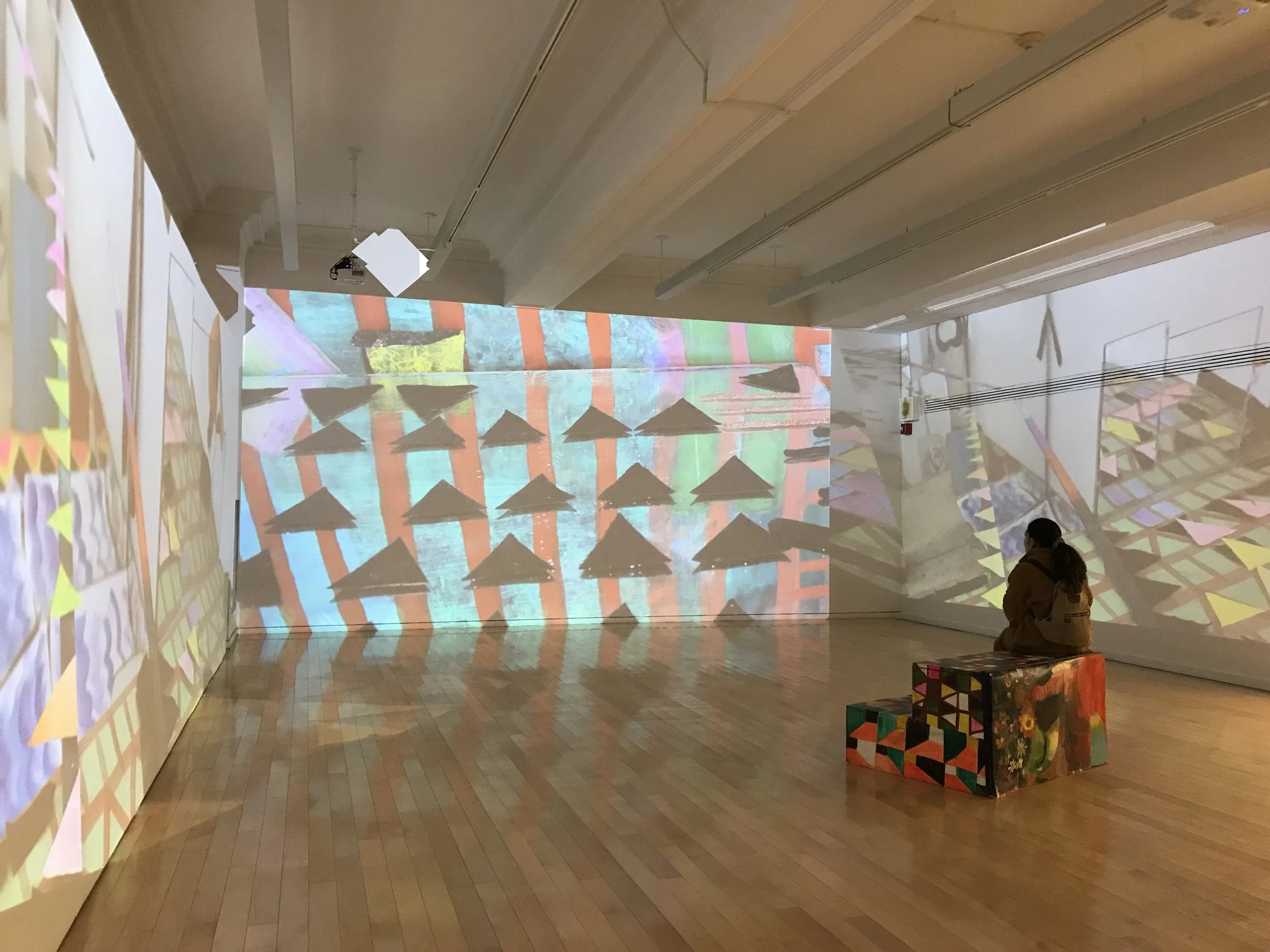
I work with what I have, installation, 2023
Can you tell me more of your artistic lineage & how that shapes viewing the world through art making?
My mother’s side of the family is extremely creative, but nobody is famous, so everyone also had to figure out how to make a living outside of their art making. That energy for sure influences me greatly. I was raised in a space in which it is normal/expected to be creative and in which that is the reward in itself. It’s what we talk about when we get together, what we care about and what we all do.
Our family’s creativity has very little to do with “art world success”, but with the delight of making and seeing, experiencing and thinking about art.
That being said, I have been able to have a pretty conventional career in the visual art, meaning that my work is in collections and is shown institutionally, I have received funding and commissions, at times more than half my income comes from art.
My husband Dan Bitney is a musician, a multi-instrumentalist with a great playfulness and openness. He is very lucky to be able to make a living as a musician. We have been collaborating on improvised performances for the past 26 years and he has opened up many spaces within me that I hadn’t known existed. Creativity is very much part of our family life, in every way.
Nowhere Now Here, Hand drawn animation, 2018
Animation by Selina Trepp
Music by Dan Bitney
Spectralina 2018
Our child Max is a gifted artist in their own right and autistic. They continuously inspire and teach me in every way. Raising them requires a whole new level of creativity and problem solving skills, as the world is often an abrasive place for them to negotiate. We work hard to build a space that is more hospitable to them. This labor manifests in all realms of our family’s life including our creative practices.
Not so much about art solely, but about living life in general - my parents founded a commune in a small town in Switzerland in the early 70ies, which is where I grew up. This place was highly controversial at the time, but ultimately was instrumental in changing many of Swiss society’s, at the time, very conservative norms. This experience taught me that it is important and productive to question authority, that we can build our own worlds. It taught me the power of being on the outside, that that position gives perspective, and that things are never static. These are lessons that I am continuously putting to use.
Website: selinatrepp.info
Instagram: @selinatrepp
Article by Alexander Eister & Jamie Walsh of the QF Crew.