
Land of Songs
Interview by Mary Morgan
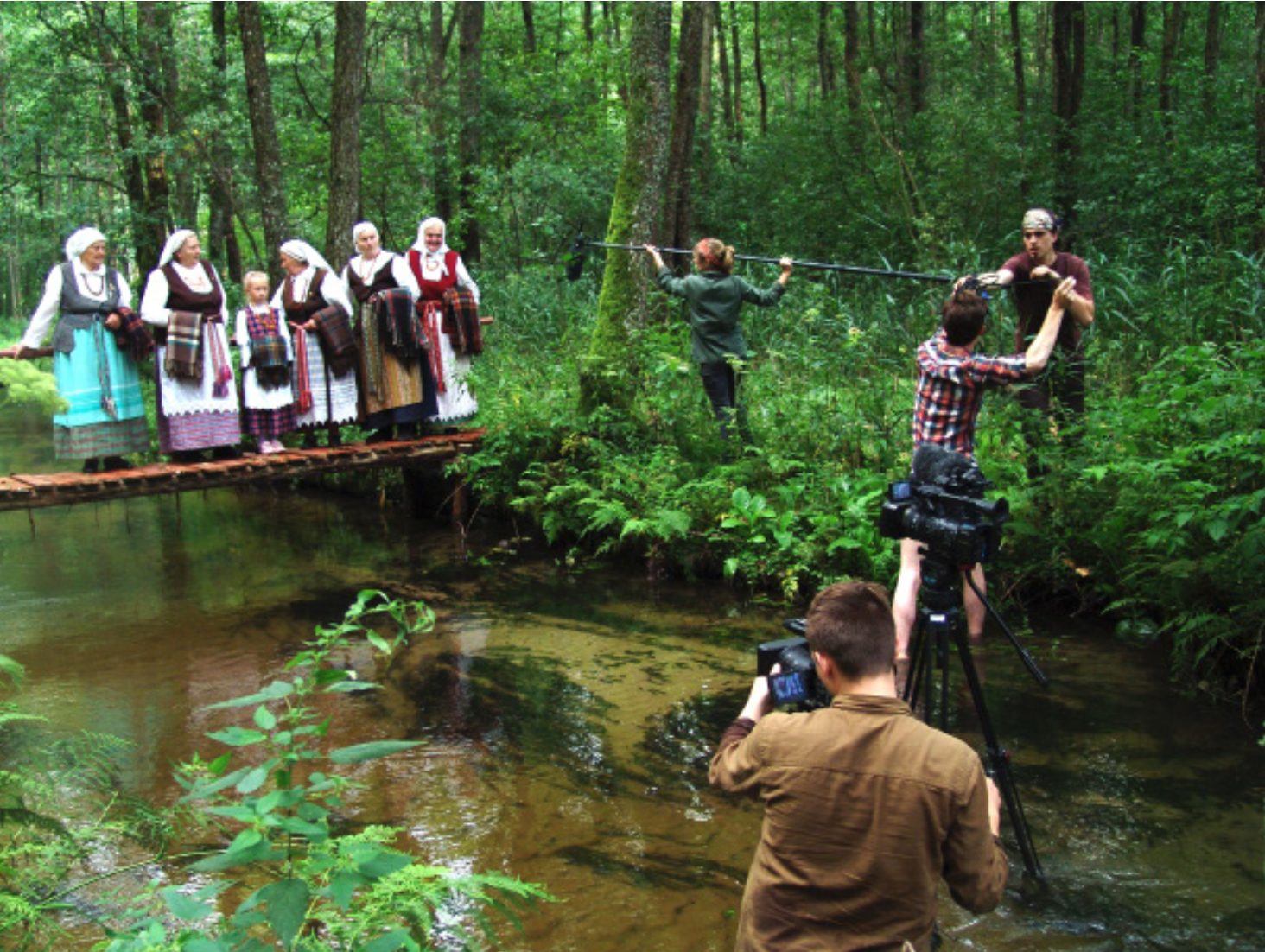
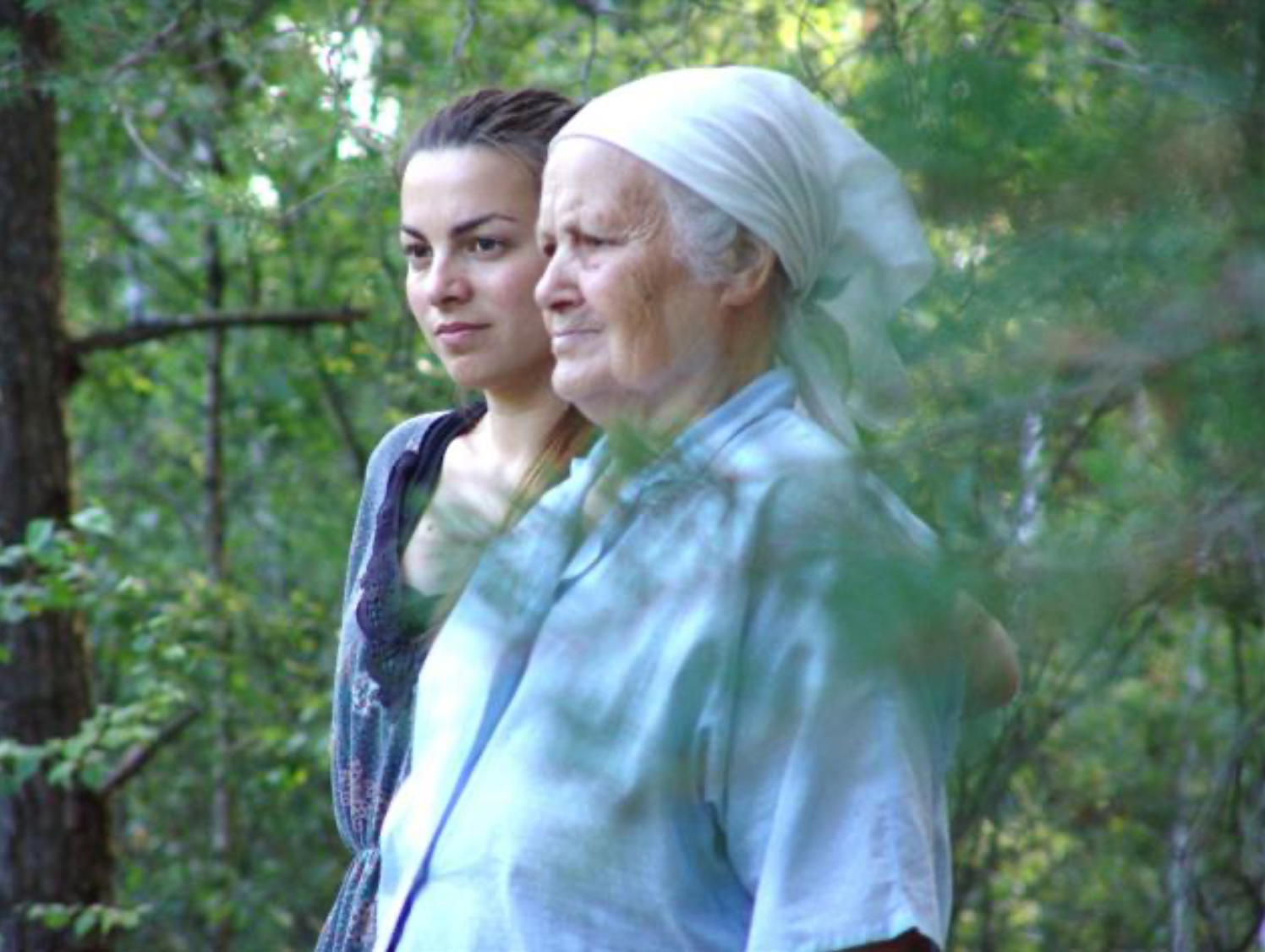
Land of Songs (Dainava) is a feature documentary film about the last women in a long line of traditional folk singers with ancient roots. These elderly but sprightly močiutės (“little grandmothers”) in the Lithuanian village of Puvočiai are joined by a colorful cast of friends and family in weaving a story as many-layered and poetic as their songs. From mushroom-filled forests to underground bunkers, haunted swamps, and sacred dunes, Land of Songs explores the transmission of history, folklore, and memory through the generations.
Land of Songs is a project of Aldona and Juilan Watts (a brother-sister duo). Aldona is a Lithuanian-American multimedia producer from San Francisco, living and working in Brooklyn.
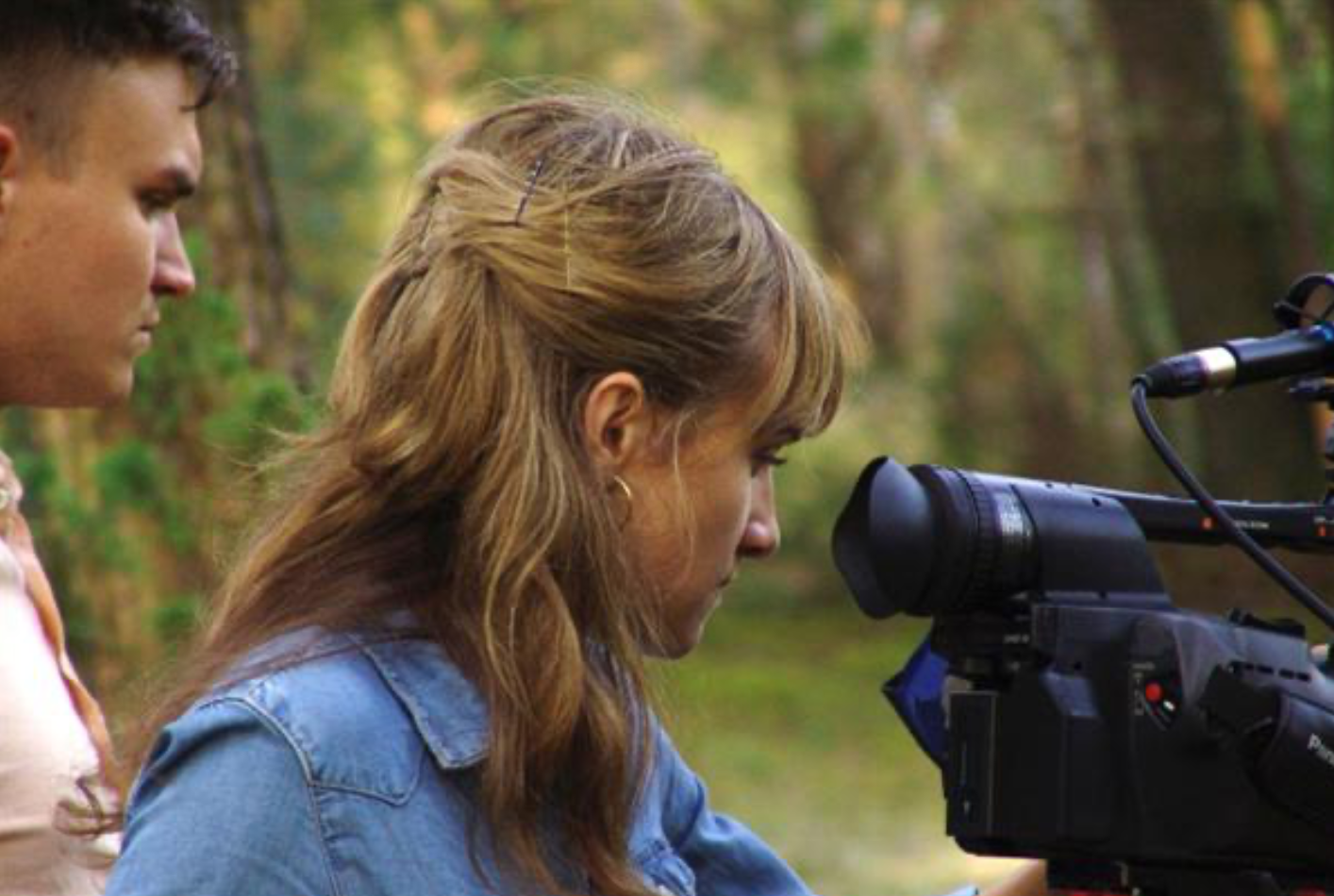
Julian and Aldona, what a beautiful project. Julian had some background in folklore/ folklife studies. What about ethnomusicology? Or have you been able to gather the attention of anyone related to the field?
Thanks! Yes, Julian received a certificate in Folklore Studies from the University of Oregon, and was a research assistant to Folklore Department Director, Daniel Wojcik, on a project about “Avertive Apocalipticism.” He took a class about folk ballads, but most of his musical background and interests are outside of academia. He’s always working on various (ultra secretive) music projects; most recently he’s been adapting some of the močiutė’s songs to guitar and piano for our film score.
Aldona pursued ethnomusicology as a part of her interdisciplinary studies at UCLA. She also spent some time in the Marija Gimbutas Collection at the Opus Archives and Research Center in Santa Barbara studying up on Lithuanian folklore and pre Christian Baltic religion. Gimbutas did a lot of important work about the Lithuanian folk singing tradition.
But the bulk of the ethnomusicological info offered in the film itself will come from interviews with Lithuanian scholars including Zita Kelmickaitė, Nijole Marcinkevičienė, and Onutė Drobelienė. They’ve all worked with the močiutės and their repertoire at various levels.
My eyes often went to their necklaces. Are they wearing amber beads?
You bet! Amber is big in Lithuania. There’s a popular Baltic folk tale about the origins of amber - it’s basically the Lithuanian Little Mermaid story. The mermaid goddess of the sea, Jūratė, lives in an underwater castle made of amber. She ends up falling in love with a mortal man, and the thunder god Perkūnas punishes her by blowing her castle
to smithereens. To this day, pieces of Jūratė’s castle can be found on the shores of the Baltic Sea - and around the močiutės’ necks!
I read that the ladies were very excited to be the subject of your film and research. Do you have any other general impressions of its reception around the community?
The amount of support and encouragement we’ve received from communities both in the US and Lithuania has been amazing. During our Kickstarter campaign, the močiutės watched the numbers like it was a lottery! They were very excited. Their families were so generous with their time and input, and the whole village pitched in during production. Since the shoot, the močiutės have been on Lithuanian TV twice, and were visited by The US ambassador! Back in the US, we’ve gotten lots of really sweet emails from Lithuanian-Americans who feel connected to the project because of their own močiutės and personal histories. We’re actually in LA right now gearing up for the Los Angeles Lithuanian Fair, where we’ll be sharing info about the project with the Lithuanian-American community out here.
What has been one of the more surprising or frustrating parts of your journey and process?
It’s definitely been a challenge to do everything ourselves, from fundraising and pre-production logistics to filming, and now post-production. Also, movies are really expensive! It’s been a challenge to make things work on a very tight budget. We’re taking it one day at a time, and learning as we go.
In terms of surprises, we were pleasantly surprised by the awesome Lithuanian crew that was waiting for us in the village. Ignas Kazlauskas, Aida JK, Vilma Barysaitė, and Kęstutis Nėnius have been fantastic, we could not have asked for a better team.
Do you truly feel that this group of women will be some of the very last to perform songs in this manner? I find myself wishing that one day there might be a pack of young girls singing together in the forest...
This was our big question going into the project. Lithuanians have always been very passionate about preserving traditions in the face of all odds, and have done so throughout times of war, occupation, and globalization. What we found was that for various economic and social reasons, young people are increasingly leaving small villages like Puvočiai to work in the cities and abroad. As a result, traditions are changing. In Puvočiai, the močiutės are the last of their kind. They grew up together, and since girlhood, singing was a part of their daily lives, inseparable from work and pleasure.
While many of their daughters and granddaughters are deeply interested in carrying on these traditions, they will just not be able to do so in the same way that their grandmothers have done. Some of them may learn some songs, some may take a more scholarly interest in the traditions, but in any case it will take on a different form.
On another note, we had the pleasure of filming some practitioners of the neo-pagan “Romuva” religion, whose faith relies heavily on singing the ancient dainos at ceremonies and gatherings. Their ranks are filled with young people! In fact, we shot a pack of girls singing in the woods as they made flower wreaths next to a giant cauldron. So there you go!
How was the Kickstarter process for you, and what’s the current update on what you are working on or looking forward to?
The Kickstarter process was lots of work! But it was incredibly worthwhile, not only because we met (and surpassed) our goal, which enabled us to start production, but for the sense of community that it engendered. The support and encouragement from our backers has been really inspiring and motivating.
As for things to look forward to, we’re currently preparing for a second shoot in November. We plan to film Velines, the ancient Lithuanian holiday in which deceased loved ones and ancestors from generations past are remembered and celebrated. When Christianity was introduced, it became associated with All Soul’s Day. It fits beautifully into the themes of our film. We also have the opportunity to collaborate with acclaimed Lithuanian composer Vidmantas Bartulis. We’re hoping to raise more funds for this and for post-production.
Would you have any pieces of advice for other people interested in documenting things of this nature in their own communities?
DIY!
Any other special nuggets that are just for the esteemed readers of Quickest Flipest? “Jei ne grybai ir ne uogos, šilų mergos būtų nuogos!