Portland Street Art Alliance
PSAA aims to activate Portland’s streets by promoting creative interventions in public spaces. They are a network of artists, academics, and professionals who believe vibrant street art is an essential ingredient in building a unique, dynamic, and playful city. By using research, education, networking, and outreach PSAA advocates for a more democratic culture of self-expression in the city.
An interiew with Tiffany Conklin and Tomas Valladares by Katrina Laura Ketchum
What is your favorite street art piece in Portland?
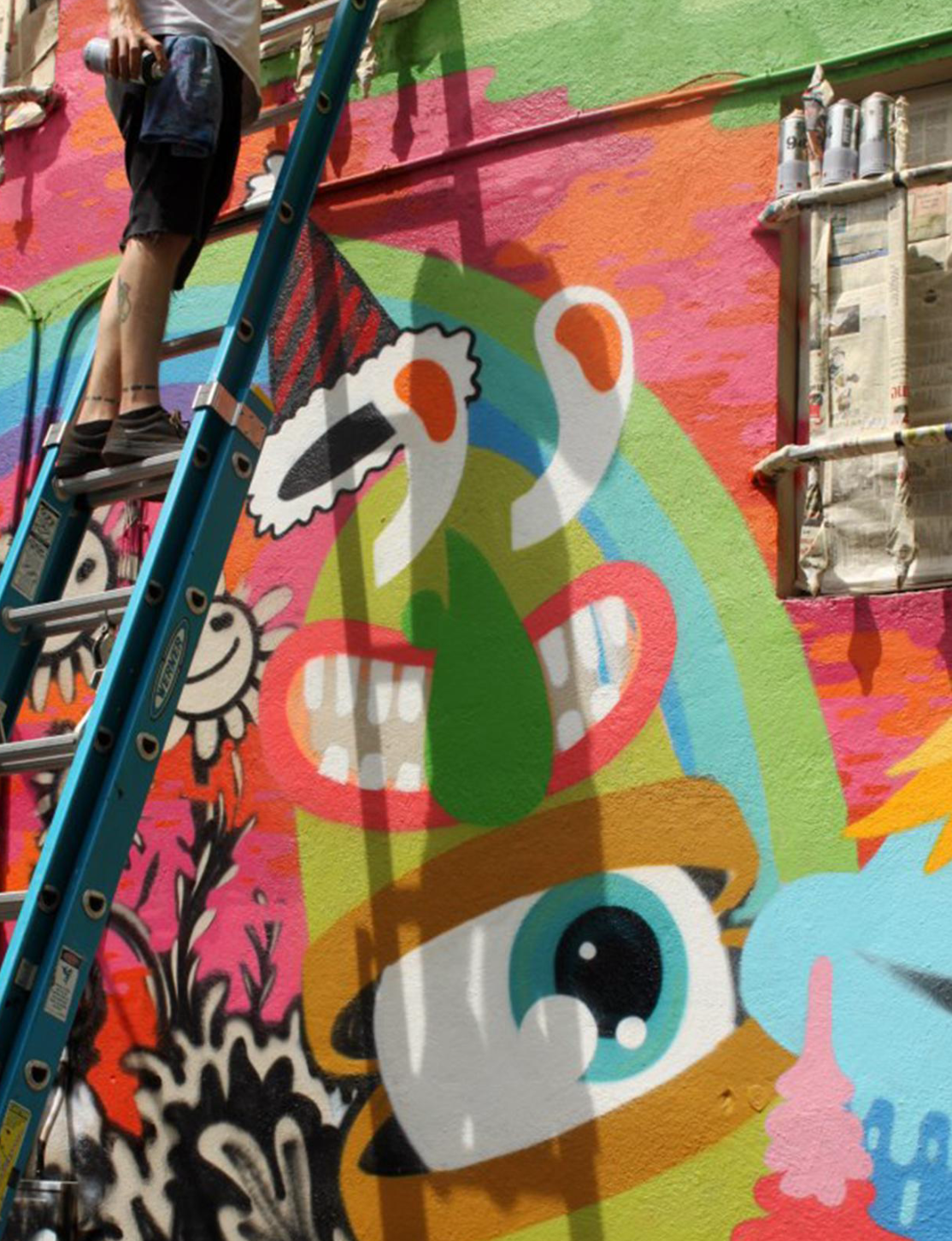
There’s a lot of good ones, but we’d have to pick the Music Millennium mural by The Lost Cause and Jon Stommel just because we were a part of the entire process from start to finish (securing the wall space, working with the owner, raising funds, securing a city permit, organizing activities, documenting the process, etc.). We think it’s a great colorful and exciting addition to the Kerns neighborhood and have received a lot of positive feedback from the surrounding neighbors and record store patrons.
What are other street art alliances out there across the nation/globally that you know of?
There are a lot of street art collectives and blogs that document and promote art on the streets and related activities (like the Wooster Collective and Brooklyn Street Art), but there are less alliances that are also actively engaged in advocacy work and promoting policy change like we do. The Graffiti Defense Coalition in Seattle, Endless Canvas in the Bay area, and the Mural Conservancy of Los Angeles are other street art organizations on the west coast that have similar goals and approaches as PSAA.
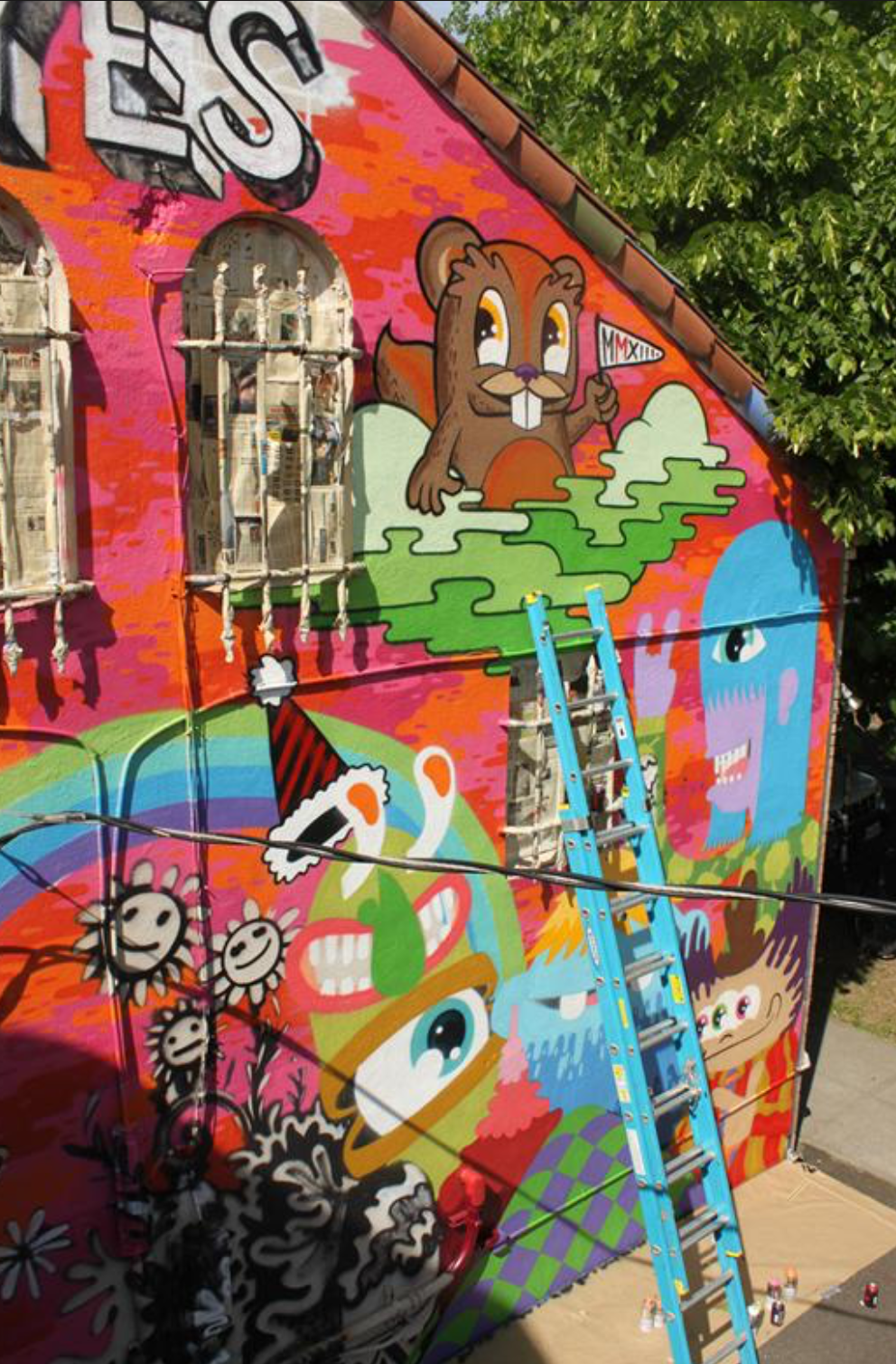
In Progress: Music Millenium Mural, The Lost Cause and Jon Stommel
In what cities do you see a need for others to forge ahead with the type of work that you’re doing?
No cities in particular. This should happen in any city that has a restrictive environment or a close-minded approach to allowing art in the streets. Art communities should work together to promote positive change and make their voices heard.
How do you think design, location and artist all fuse together in the creation of a piece? Is one aspect more important than another?
With the example of site-specific street art, the convergence of the artist, design, and location are paramount. Artistic interventions that creatively engage and transform existing urban structures and surfaces directly reflect and comment on these spaces and our human condition. If removed from their urban context (let’s say into a gallery setting), this type of street art loses much of its power and meaning. It takes a special type of artist to work in the streets in this way, a particular kind of perception and ability to ‘play’ with space. This type of art also challenges passersby to look at their environments in new and exciting ways.
How does the process work for an artist who wants to make a contribution to Portland’s Street Art scene?
Just do it (yourself)! Unlike other cities, getting owner-permission to paint a mural in Portland is not enough; you must also get a city permit or an art easement from Regional Arts & Culture Council (RACC). Information about those processes can be attained from the City of Portland Original Art Mural Permits and RACC Public Art Murals Program websites. Other than painting an official mural or just putting out un authorized art, people can contribute to the street art scene in many ways – they can network with the local art community, attend gallery openings, art fairs, RACC events, Last Thursday on Alberta, Hump Day Art (second Wednesdays), and above all keep advocating for art in the streets!
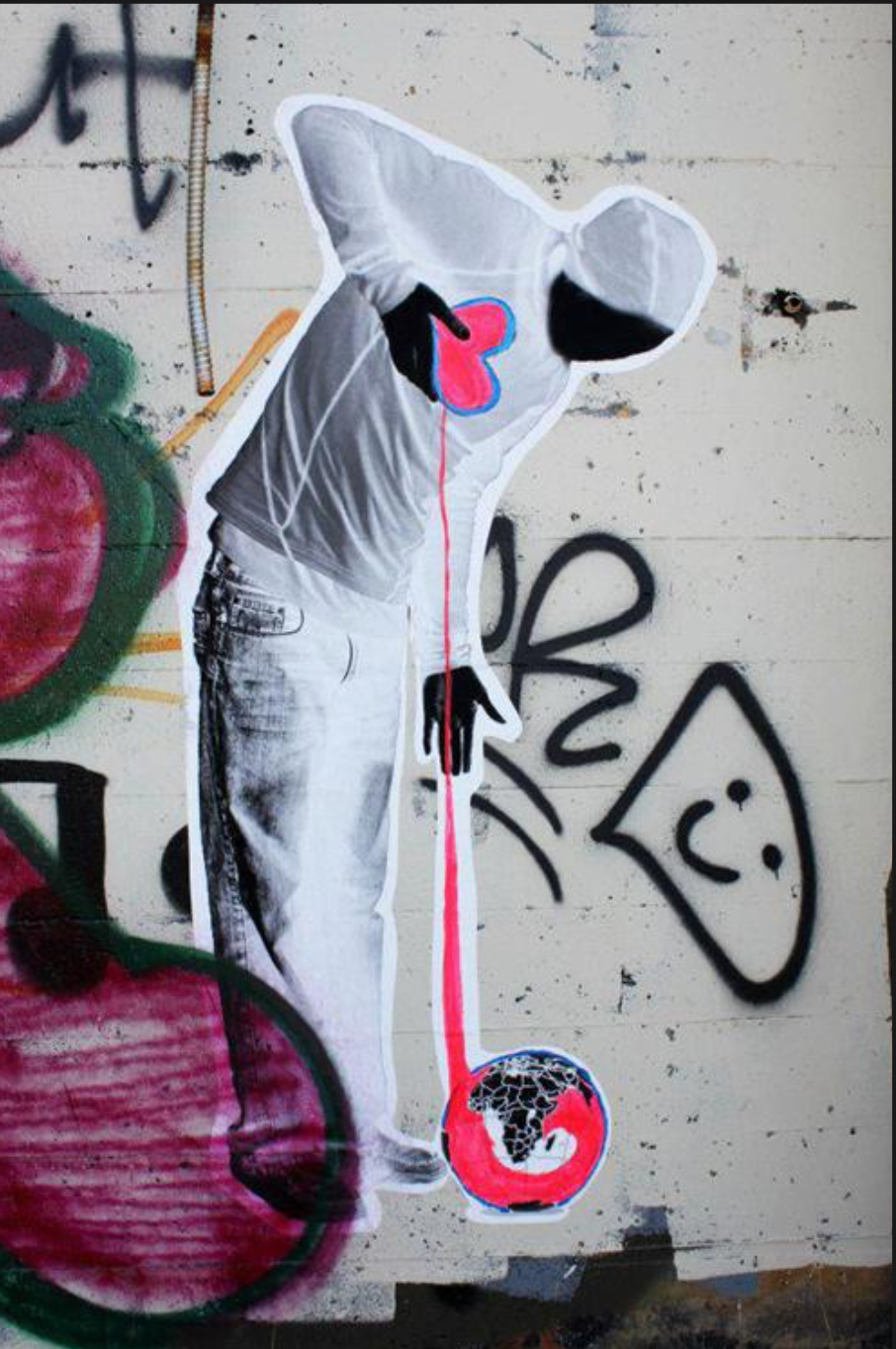
What’s the most challenging aspect of promoting street art in this city?
The most difficult part of running an organization like PSAA is balancing the diverse opinions of community members. We want to be responsive and inclusive. Portland’s art scene consists of mostly loosely-connected artists and groups that come from many different perspectives and life experiences. Our goal is to find common ground that we can then collectively work from. We’ve learned that we can’t please everyone and just have to sometimes go with what feels right and has the most support. Another challenge is navigating the bureaucracy of the city and knowing how to encourage street artfriendly urban policy change (like loosening the mural permit regulations and having a less aggressive graffiti abatement task force).
What’s new and up-and-coming that we should be on the look out for?
PSAA is applying for grants to fund some of our street art projects, like the Portland Free Space Kiosk, a designated wheatpaste art wall. We’re also working with art managers at RACC to implement a Utility ArtBox program where utility boxes around the city are painted by local and visiting artists. Many cities have programs and spaces like this, and we see no reason why Portland should not. We also have a few more murals in the works for this fall and next spring. Keep an eye on our website for news and project updates!