ELandF Projects
An interview with Bruce Burris by Katrina Laura Ketchum
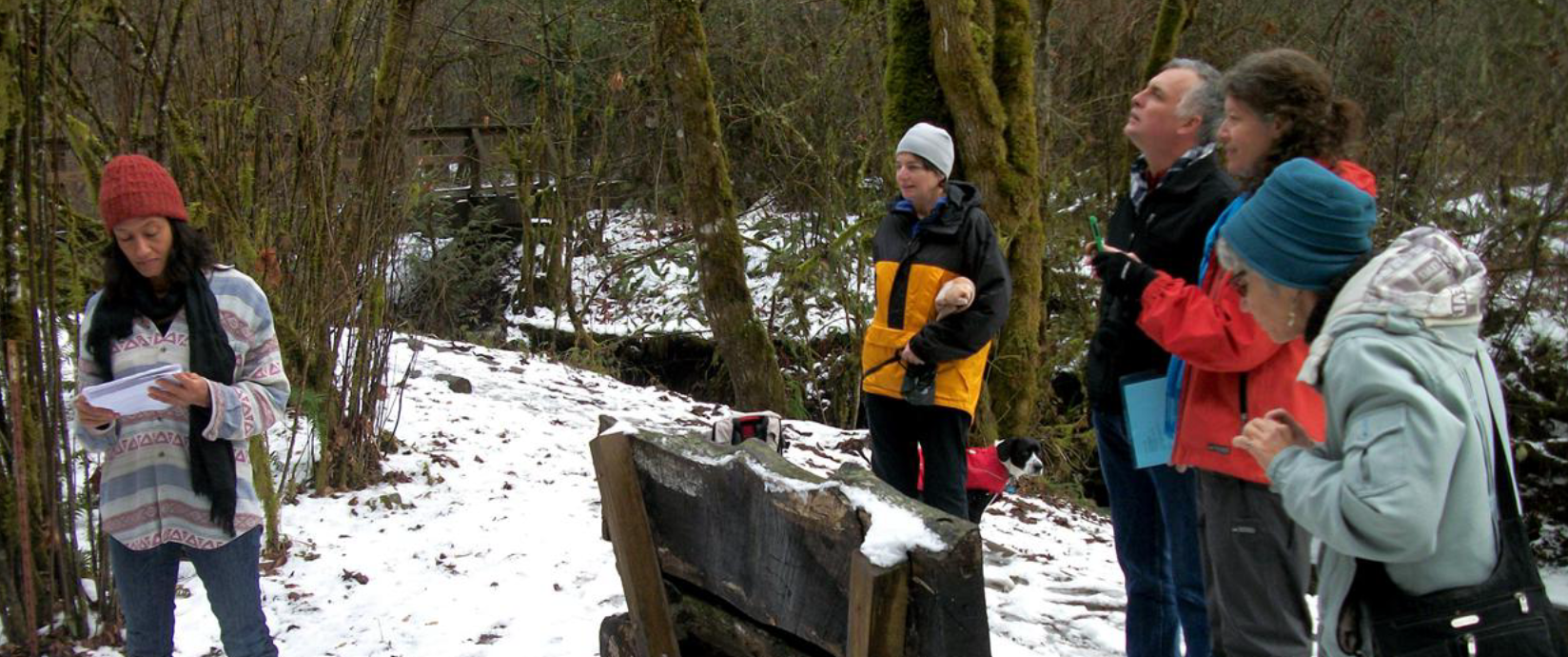
Project “SOME POEMS FOR SOME FERNS”
Tell us a little bit about ELandF projects and gallery space. What is your mission and what makes you exist?
ElandF projects is an artist run organization, some ten years old whose initiative is to improvise, collaborate, create, support and provoke. Initially we came together to create environmentally themed exchanges under The Kentucky Mourning Project, a program which, among other things, paid professional mourners to mourn lands lost to development. We operate mostly in Oregon and Kentucky.
Our mission statement is, “ELandF projects provide various supports for intimate artist driven concepts which usually occur within public space and which fall outside the realm of most traditionally funded projects”. We want to encourage adventurers who create intentionally diminutive interventions which do not necessarily rely on box office, grants and other similar measures for backing, or are working on larger projects which are in the early stages of development and might benefit from some form of support.
Our current mission in Oregon is shifting a bit as we are considering the possibility of a brick and mortar project space which would particularly support performance/ritual, installation, sound, various community projects, etc. Corvallis/Albany has a population of well over 100,000 and we believe that an innovative, economical and flexible contemporary space will be an important component to the cultural life of our community. Currently we are contemplating organizing as a nonprofit, though we may merge with another organization.
What do you feel is so important about helping to fund artistic endeavors that typically fall outside of the realm of traditional funding?
I guess the better word would be support, not necessarily fund, though we do make it a point to provide small stipends to artists we support. We take the intention(s) of a maker very seriously. Some projects speak for themselves with little effort, while others, such as a fellow who was quite shy, yet still wanted to share his creative efforts with others, become opportunities to work supportively to create really unique and positive outcomes. For an artist too shy to allow his name to be connected to a public work, grants and traditional forms of support are pretty much out of the question.
The same might be said for those of us considered to have disabilities. Here, performance/ritual can serve as a terrific way of sharing complex motivations and insights, and we have done many collaborative works which have certainly broadened our understanding of the potential of performance/ritual.
Describe “artist driven” projects. What are a few examples of past projects? Anything you are particularly excited for coming up in the near future?
We define artist driven roughly as referring to work which originates from the artist creating the work as opposed to say, a city-funded public arts initiative.
We are interested in sincere and thrilling efforts which can benefit from a few supports. The supports can include general strategies such as logistics, publicity and so forth, but it seems that mostly what we mean here is that an artist may benefit at times from not going it entirely alone for the duration of a project. Consider ELandF projects a friend you didn’t know you had. Examples would be a surprise check for $100.00 given to an artist who had taken a few days off from her part time (no benefits) job to edit what would be her first published short story, prior to mailing it in or … finding ten very last minute sandwich board carrying volunteers for another project.
On June 5th we hosted “Re Animations #2” in Corvallis. This is a reenactment or rather a reanimation of a number of past pieces performed simultaneously and at one location. Many ELandF pieces are set in locations which are not easily accessible. “SOME POEMS FOR SOME FERNS” for example was set in a forest outside Corvallis. The reanimations are typically performed by the artists who created the pieces originally, though on occasion guest artists are invited to alter the original performance. In this case we presented five past performances, including “In the Language of Flowers” by Eugene’s own Lyle Murphy, and unleashed a new Hokey Bear performance by the artist Bryan Putnam.
This reanimation served the further purpose of fundraising for the next ELandF sponsored project which is a first for us and will involve a tent, a loaf of white bread and the buttons on your shirt. We also launched a dialogue around creating a Corvallis project space.
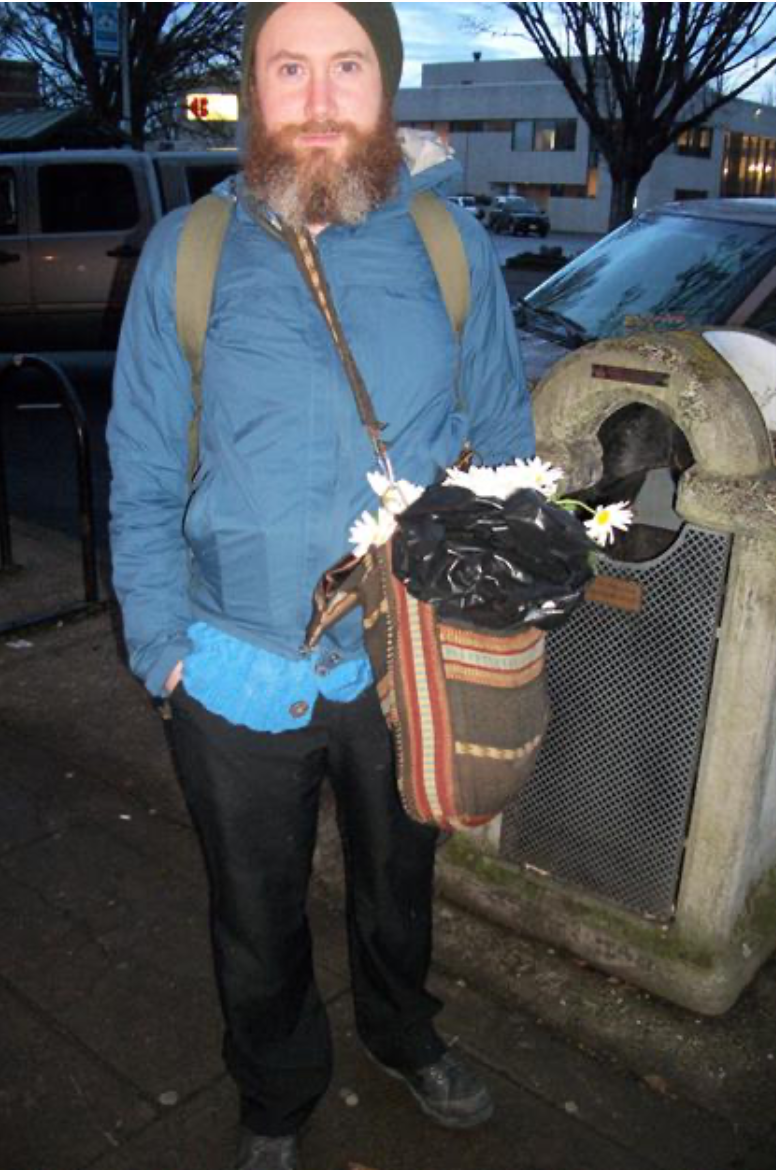
Project: “In the Language of Flowers”
What are five adjectives to describe your organization? What makes you, you?
May I mention my favorite state capitals instead? They are Olympia, Pierre, Bismarck, Helena and Juneau. In terms of what makes us, us… well, I would say there is most definitely a DIY sensibility at work, creating a structure, a kind of silly putty framework to support works and creators who may not have had much experience in the art of receiving thanks for what it is that they do.
In what ways do you support artists and artistic projects? Does ELandF act/serve as a megaphone for artists?
I would not necessarily say that we serve as a megaphone. A thing we do a lot of is research, reading art publications, talking with other artists, keeping an ear open for that vibe which seems to emanate from artists who really seem to be onto something especially interesting. In Re Animations #2 both Lyle Murphy and Bryan Putnam come to mind. We often simply email an artist who is interesting and ask if they might like to do something with us. We also put out a type of artists call, modeled after Help Wanted ads. These seem a good way to nudge some into the role of performer and many, many of the performers in our own pieces had never considered that before.
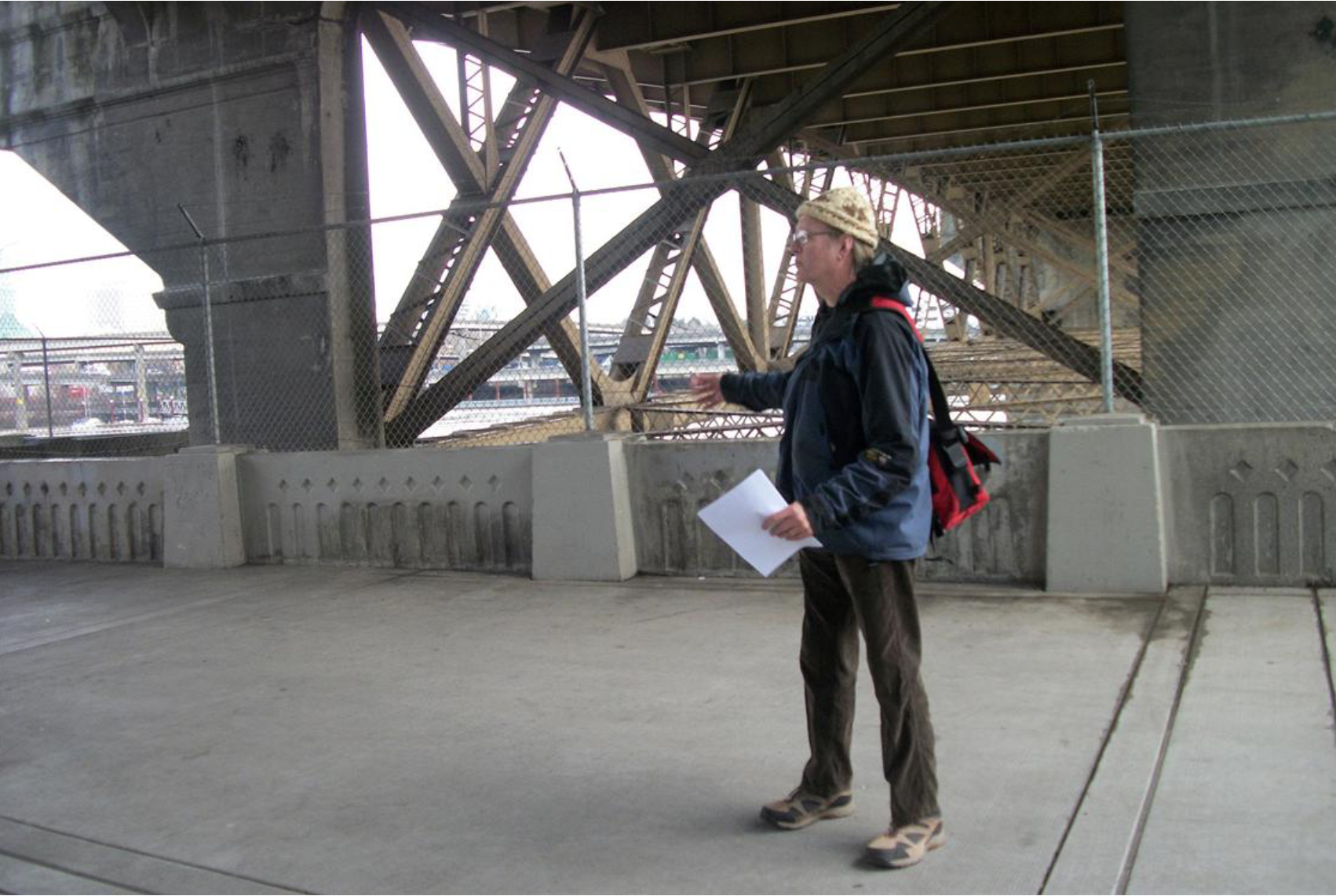
Project: “Corvallis Tree-Being”
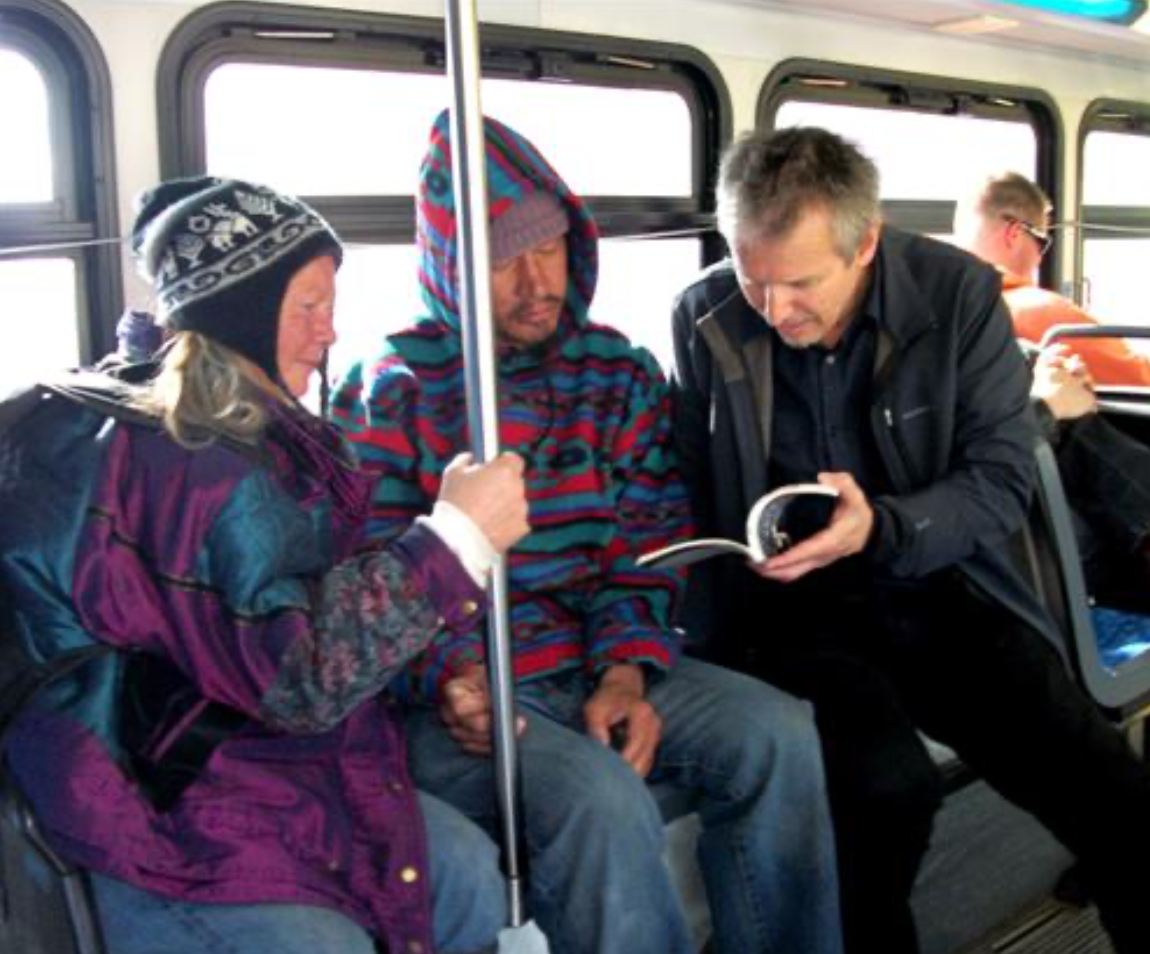
Project: “Very Public Readings”
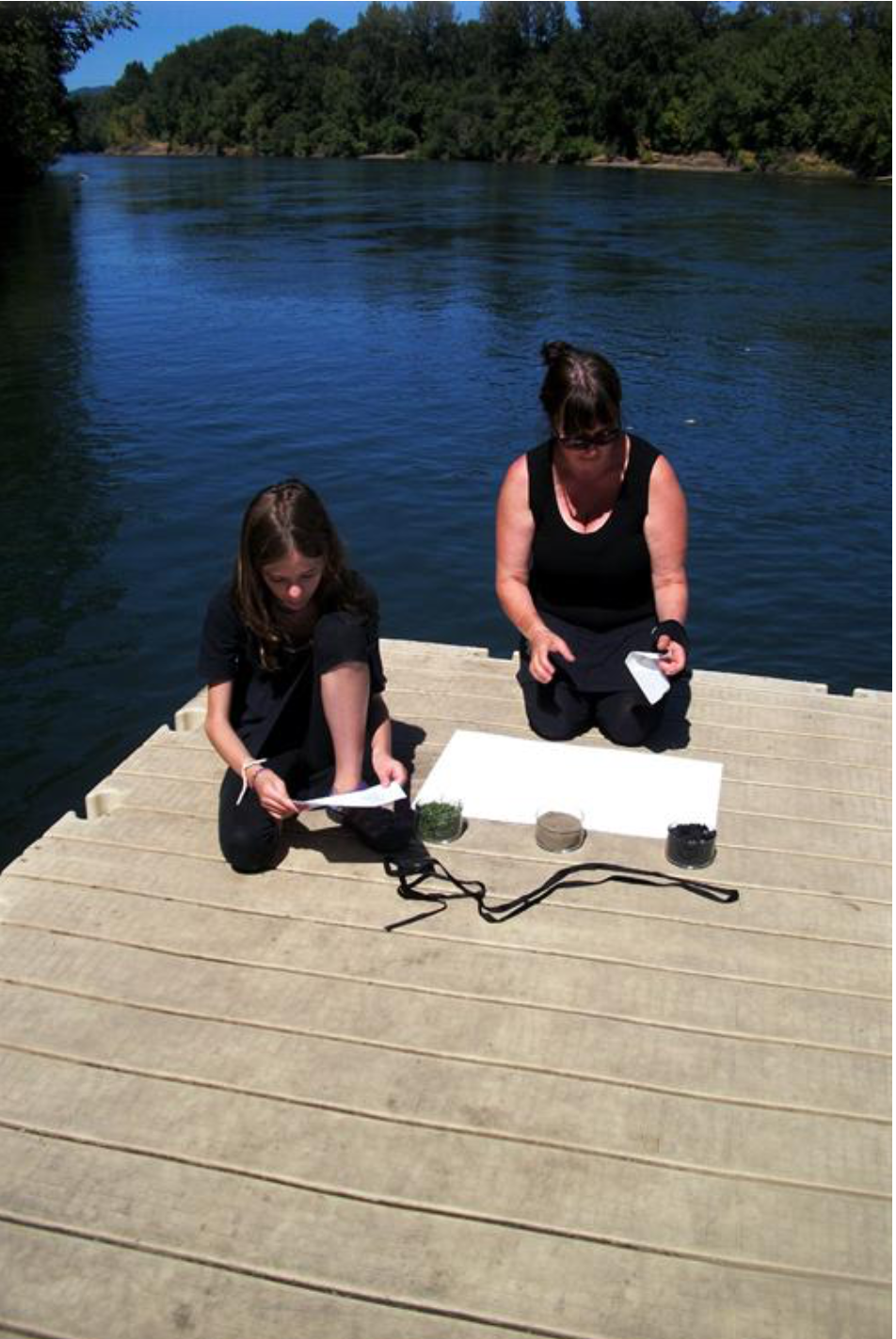
Project: “Catch and Release”
In what ways do you believe in the accessibility of public space to the success of connecting with an artist’s work? Is there a direct and/or indirect correlation here?
I ran this question by a friend and we had quite a good chat, we also drank a large amount of excellent beer and I am not exactly trying to be a smartass here but I think that this question is… just one of those things. A kind of answer to this though is that despite off the beaten path settings, many people have stumbled across ELandF supported events and due to this … had what I hope was an enriched moment or two. Additionally we look at the media that the work generates as an end in itself… often there is quite a bit… and in that sense as well, people have an opportunity to comprehend the very broad spectrum of art making possibilities
In what ways does your public artist space serve the community-at-large?
I do think that there is at least a hint of an offering in these performances, something which can be accessed for free, something which more likely than not you can be involved in just because you want to. Though we do pay artists for performances, we don’t do fundraisers, grants, etc. and the absence of money and the absence of the talk of money and the procurement of money (til now) has been a real relief.
As my colleague/collaborator the Pittsburgh writer Jane McCafferty says of our projects, “We hope that a public art sphere can stimulate the imagination of a lot of people. We try to invite people to dream, by suggesting that there might be more ways to look at something than first meets the eye. We like to interrupt, as least for a while, the pragmatic ideas that often put people in boxes, and we hope the community benefits from this. We also serve the community by enlarging the notion of what it means to be “considered to be disabled” and how community is essentially, all of us.”
How can individuals get involved with the project as artists and as supporters of the arts community?
Anyone may email us about crafting supports. Soon we will be organizing enthusiasts who may want to participate in the planning phase of a project space in the Corvallis, Albany area.
How far reaching is the project? Do you reach beyond the limits of Corvallis into other areas of Oregon, or are you mostly concentrating your efforts in this community?
Most of our programming occurs nearest to where those most invested in ELandF projects live, but we have created or aided in the creation of interventions in Los Angeles and San Francisco, Pittsburgh and most recently the Corvallis Tree-Being gave a lively performance on the banks of the Willamette River in Portland.
Have you collaborated with other artistic and/or non artistic organizations to strengthen your mission? If so, how? If not, any upcoming plans to do so?
Of course collaborations between artists, organizations and so on, are the engine for our projects and we have certainly partnered with organizations and businesses that may not see themselves as artistic, and yes this does strengthen our mission as it is our belief that most all of us benefit from the broad sweep of imagination that an unobstructed creative experience can produce.
On the personal side I have spent much of my adult life as a founder/ executive director of agencies/ programs/businesses geared to create studio and career supports for/with artists considered by some to have disabilities. Community collaboration is an absolute necessity for such a practice. In 2012 my company (Latitude Artist Community) received a Governor’s Arts Award for Outstanding Community Program. So what I am saying here is yes, collaborations are essential and important and really collaborations are bonds between friends and in this is way we move forward and in this way our entire community can understand our value as an organization as it is based on a commitment to our community.