Films For Friends (FFF) at Studio Route 29
Written by Grant Scott-Goforth
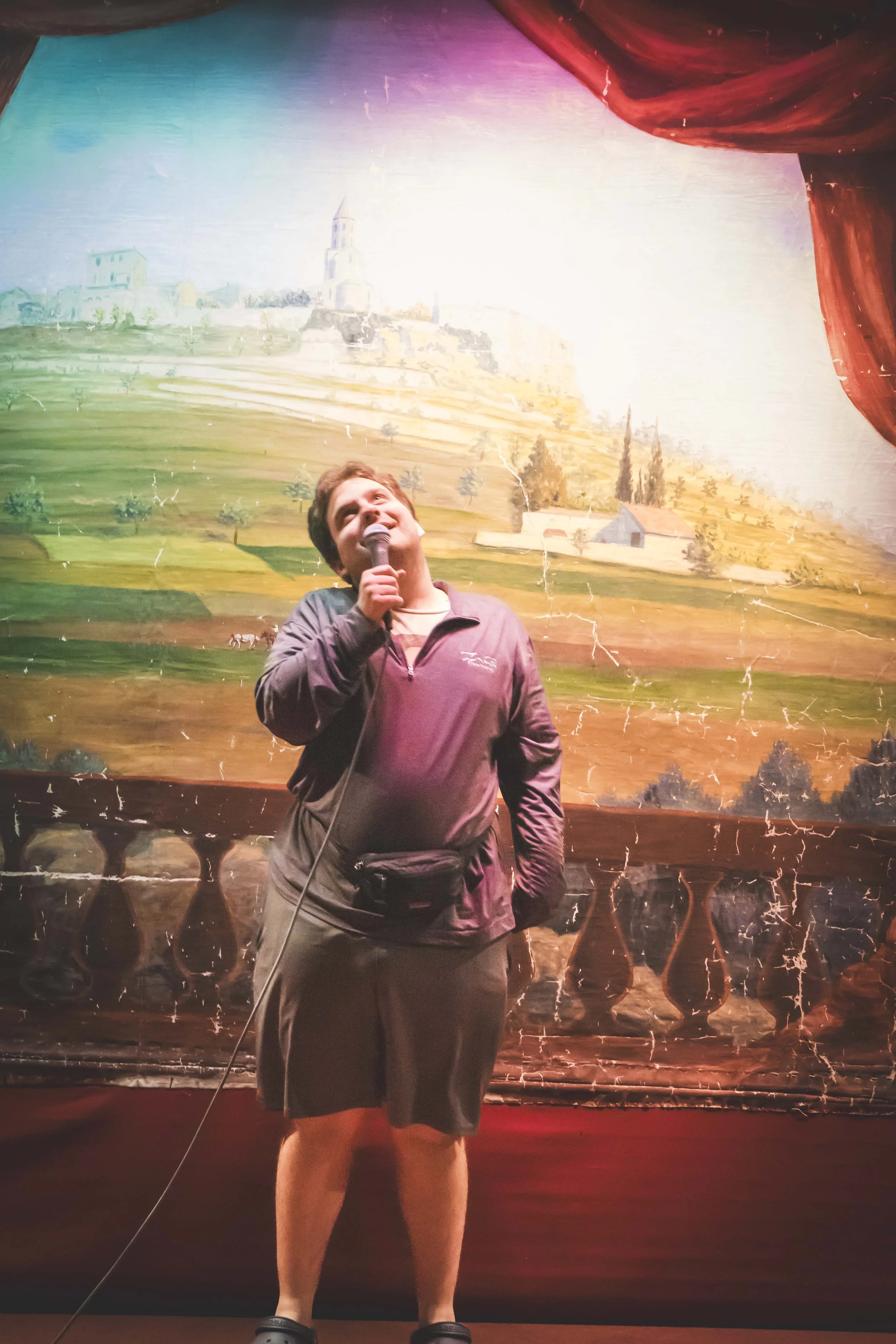
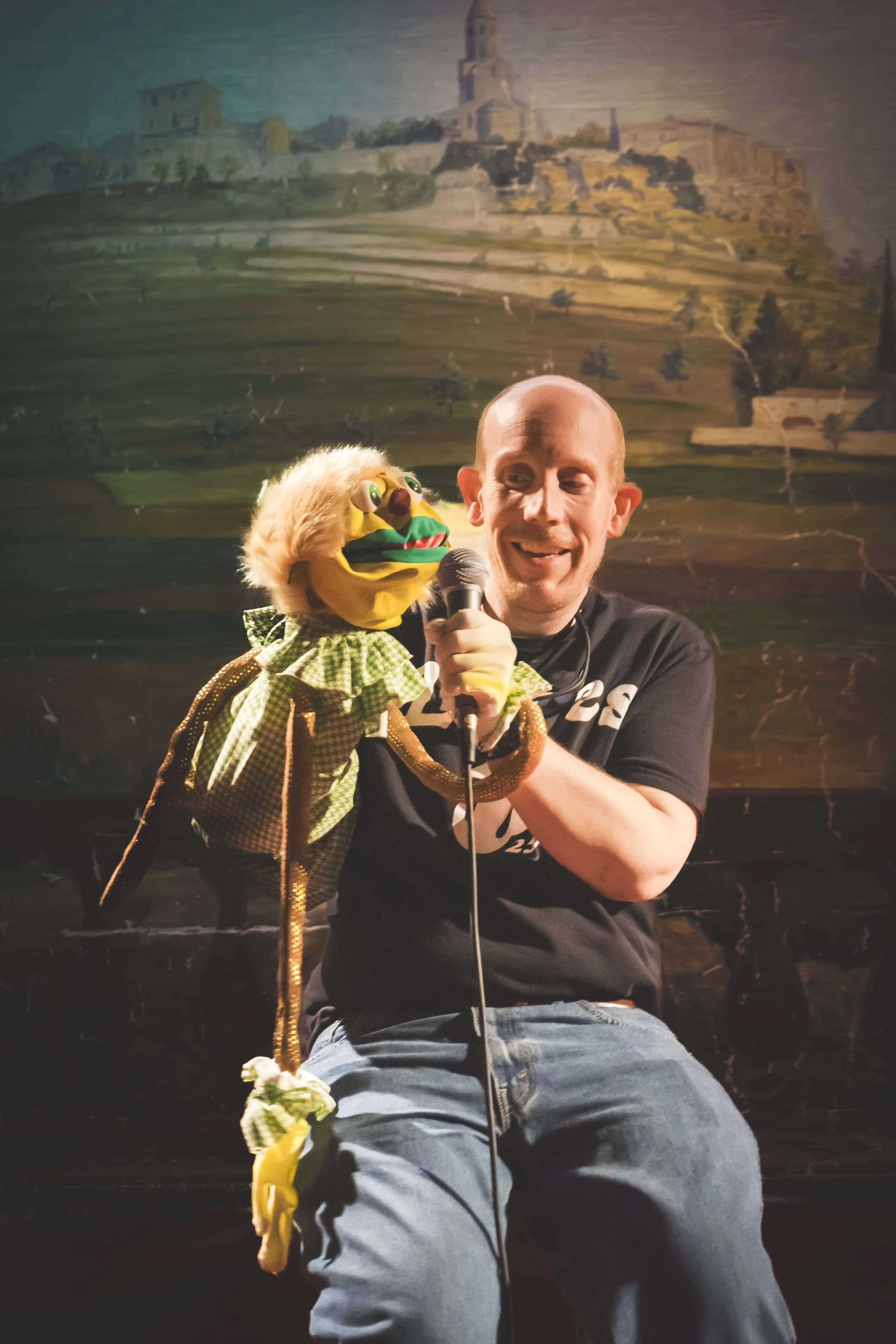
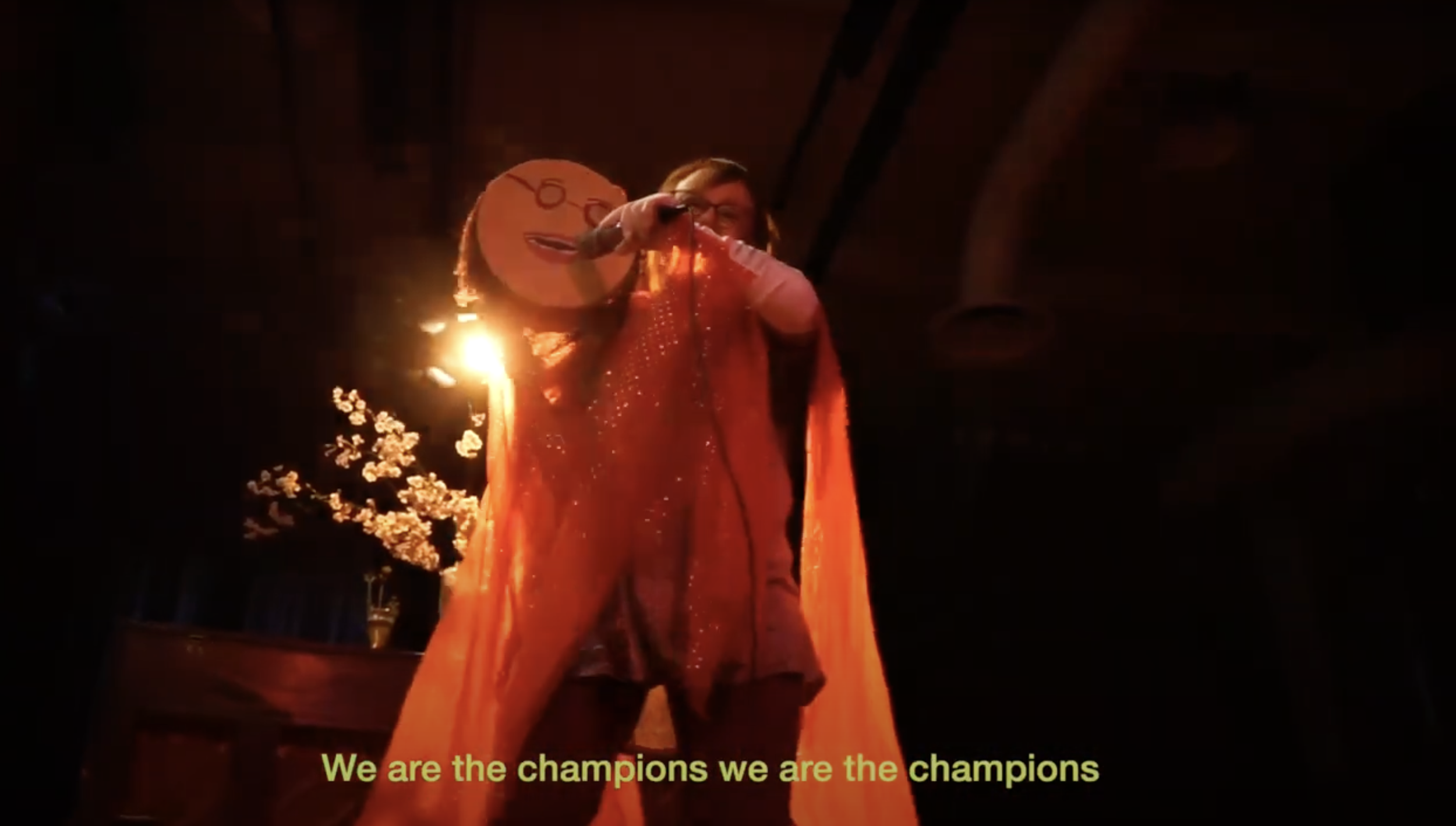
Theo Baransky spontaneously performing an epic longform joke at Films for Fools39
Theo Baransky knows movies. Really knows movies. He’s watched thousands of them, interviewed filmmakers, and can recite the history of everything from major studios--their hits, flops, and legal troubles--to niche companies that created family-safe edits of motion pictures for Mormon viewers.
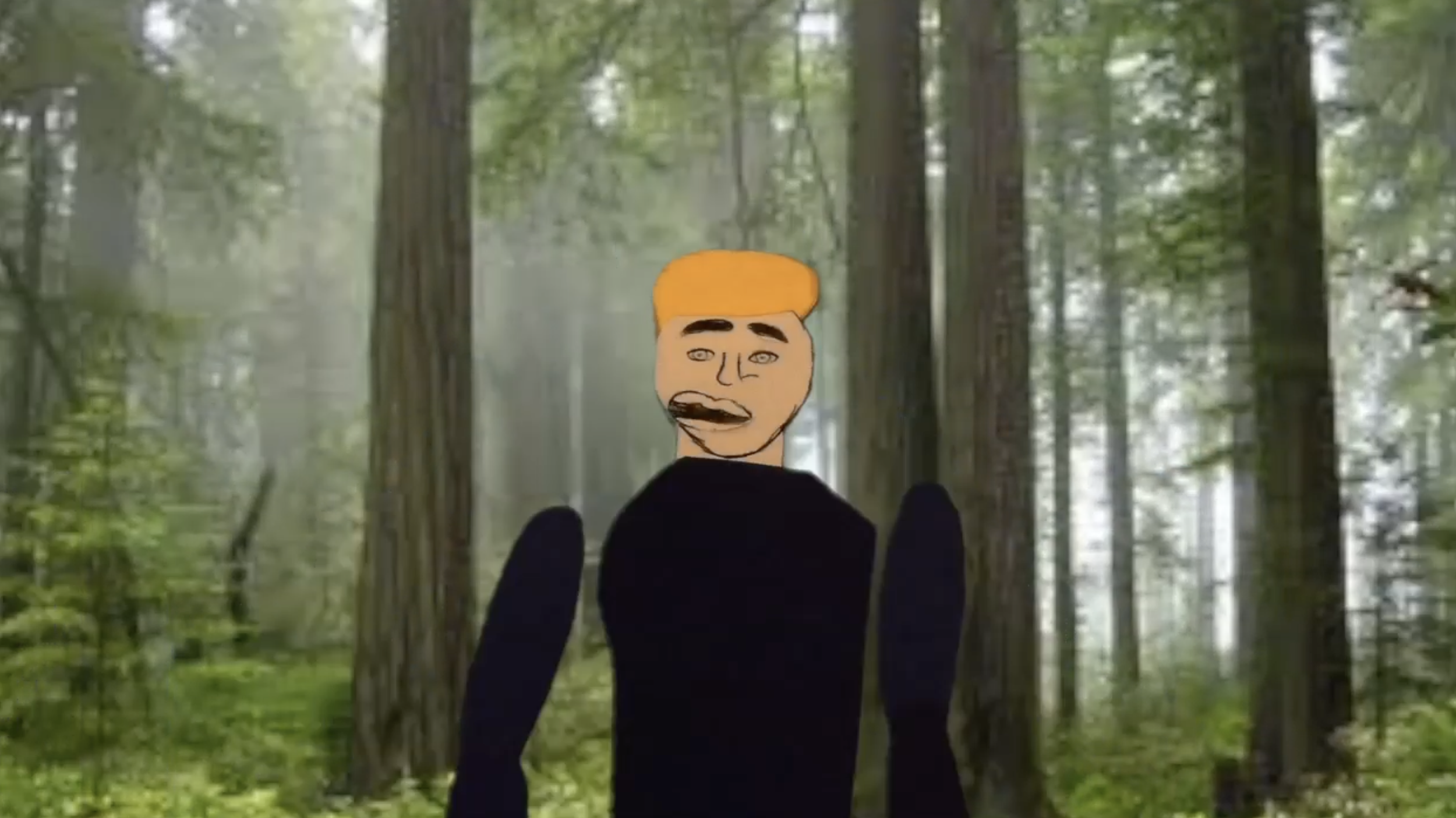
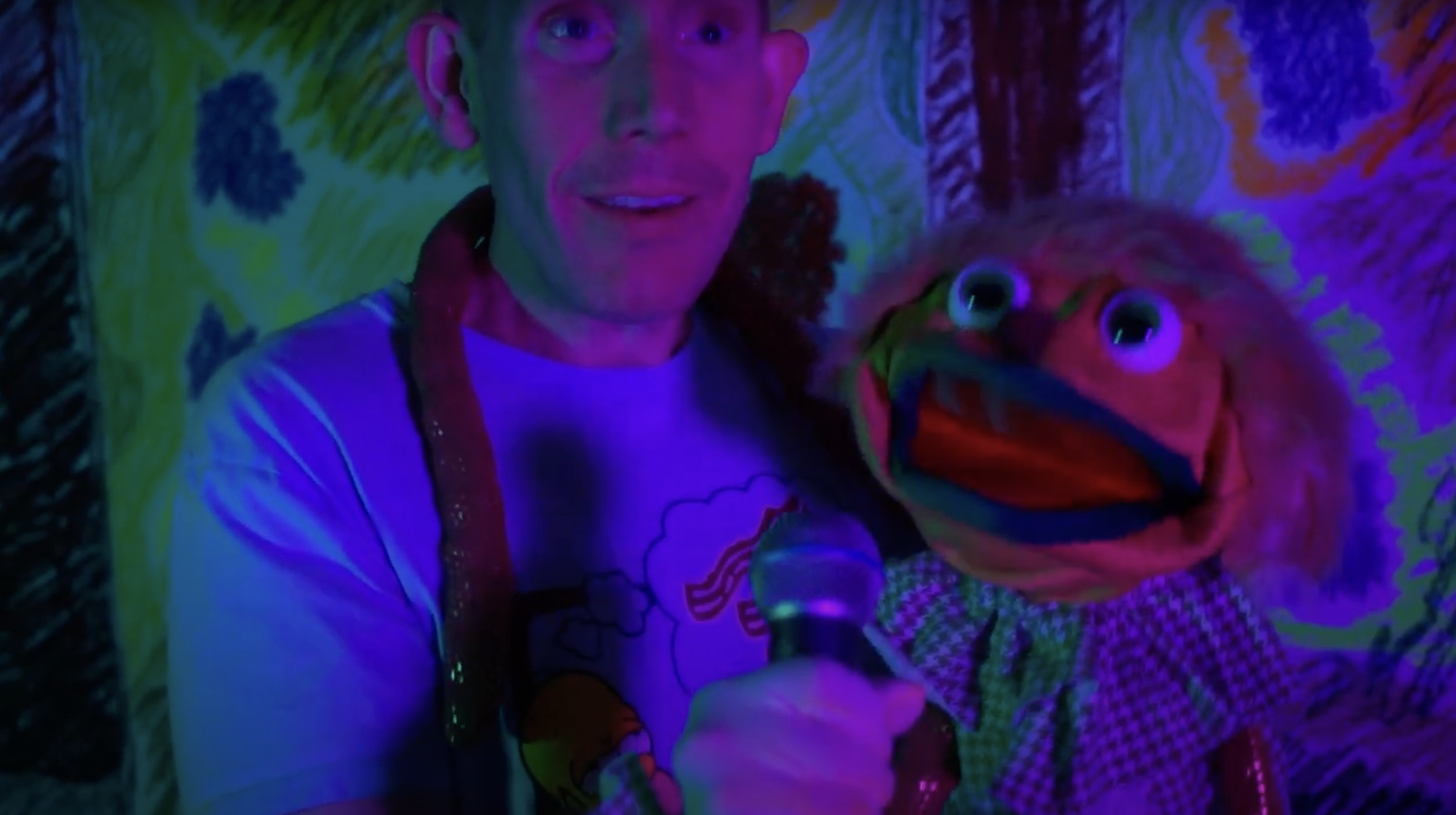
He’s put this lifelong passion into art at Studio Route 29, where he’s painted reproductions of dozens of production company logos, created animated shorts, and helped spur a monthly film event in Studio Route 29’s theater space, Films for Friends (FFF).
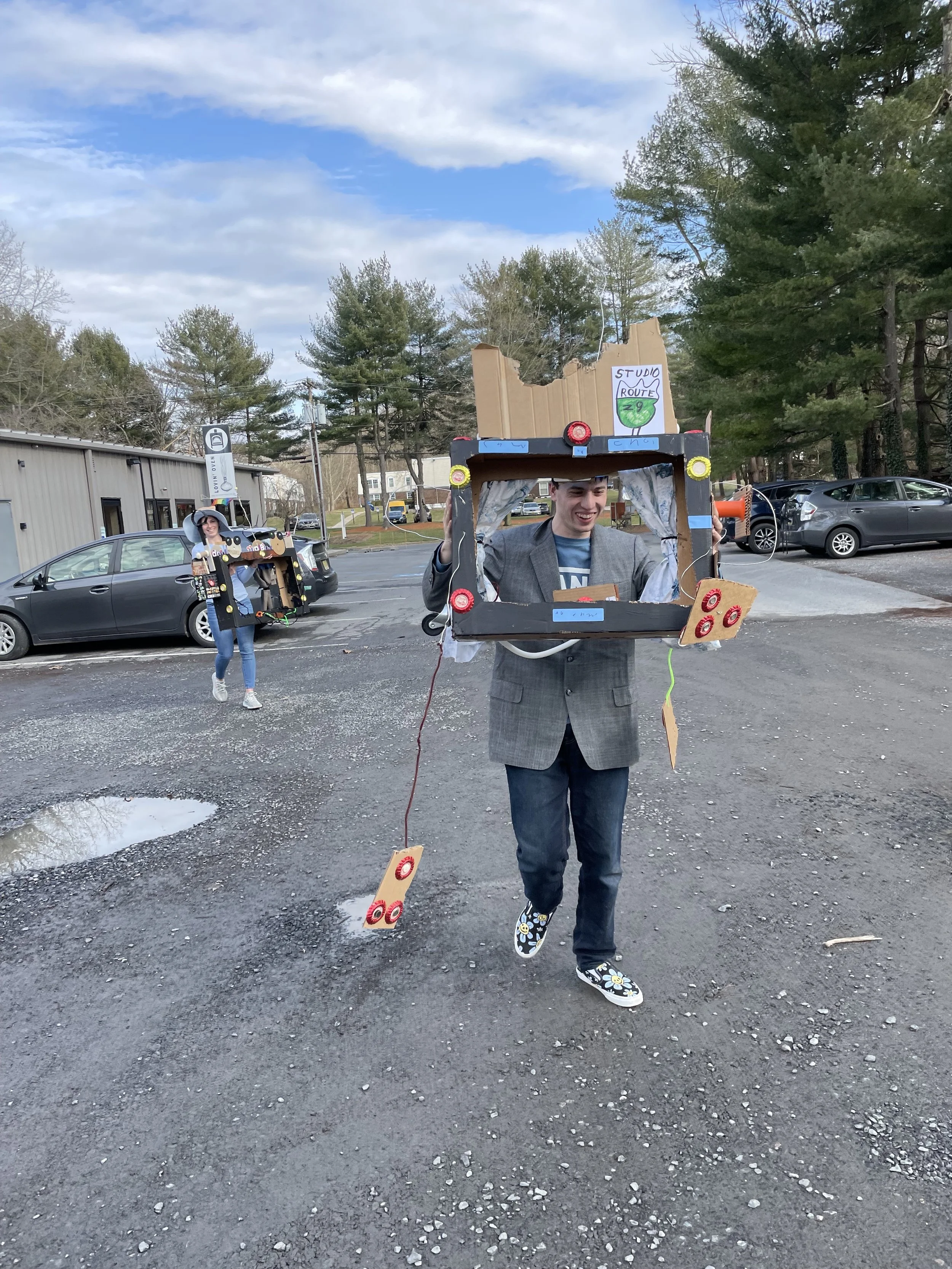
Studio Route 29 is a young studio that supports artists with disabilities founded by Kathleen Henderson, Lydia Glenn-Murray, and Hop Peternell in the fall of 2022. Located in rural Frenchtown, New Jersey, the studio and gallery offers space and programming for local artists and has become a community venue for exhibits, performances, and programs like Films for Friends.
“We put on a lot of public events,” Hop says. “That’s something that we wanted from the beginning when we started this project. We imagined an organization that brings resources to artists and the community at large. To also make it fun and exciting to be here for the people who aren’t necessarily artists.”
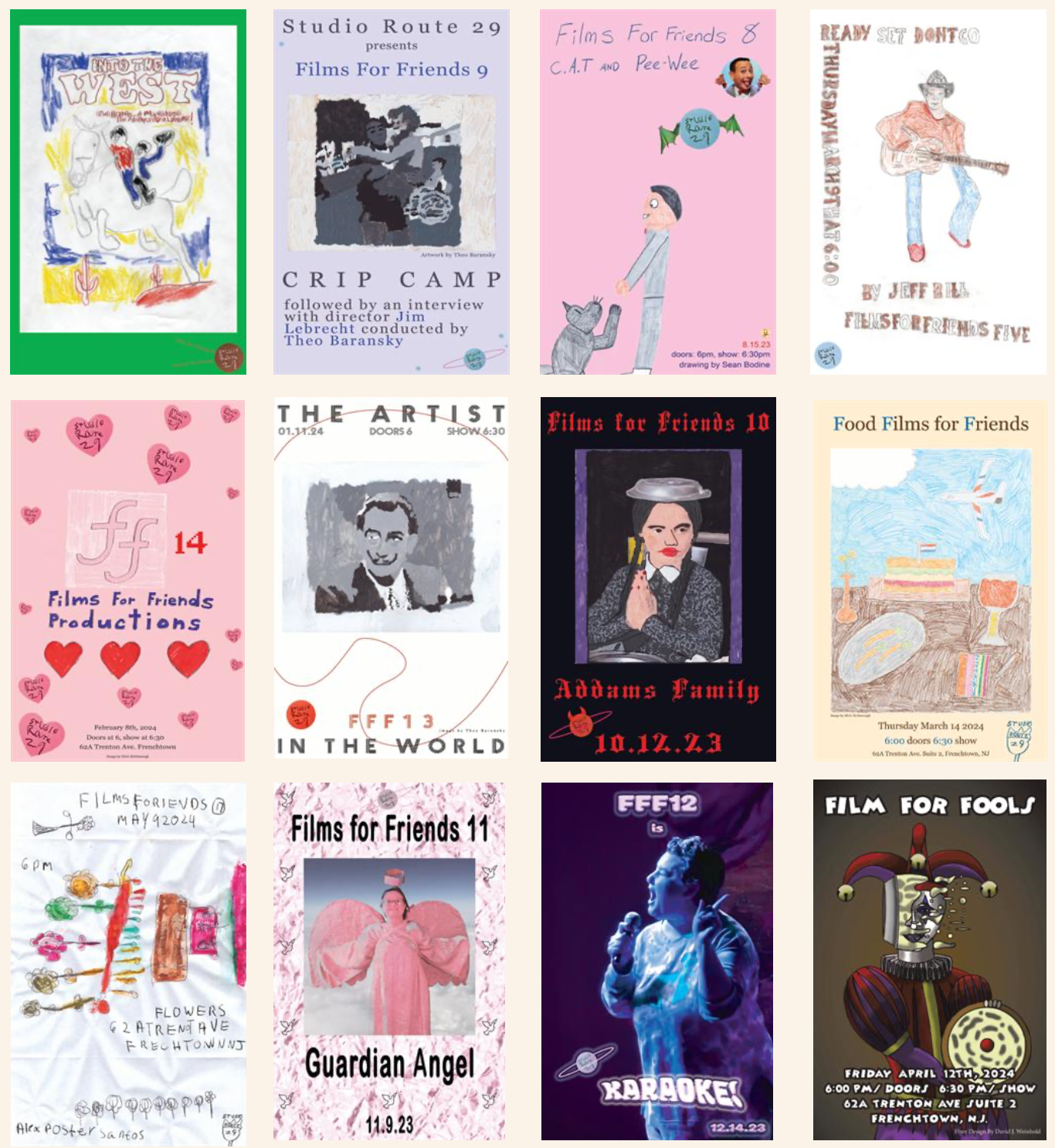
A selection of Theo’s production company logo paintings
Studio Route 29 supports a wide variety of mediums, another aspect that Hop says was a goal from the beginning. The two- and three-dimensional art produced by artists fits into a more traditional studio template, with gallery space for exhibits and art sales. Hop knew they also wanted a strong music program, but it wasn’t until meeting Theo, who came to the studio through a high school program and has stayed on since graduating, that the idea of a film program was born.
Theo was interested in movies before the studio was founded, but said he wasn’t yet passionate about art, and the stifling nature of the pandemic left him unhappy and feeling directionless.
“After coming here I feel totally different,” he says, describing picking up new art techniques and a strong community to expand his creativity.
Films for Friends was born out of Theo’s love of movies, and the studio’s desire to connect with the broader community and expand the types of art it supported. Making use of a theater housed in the same building and loaned by sibling org ArtYard, they screened the Irish adventure movie Into the West for the first event, and quickly realized the screenings could be showcases for their own artists to share performances and more.
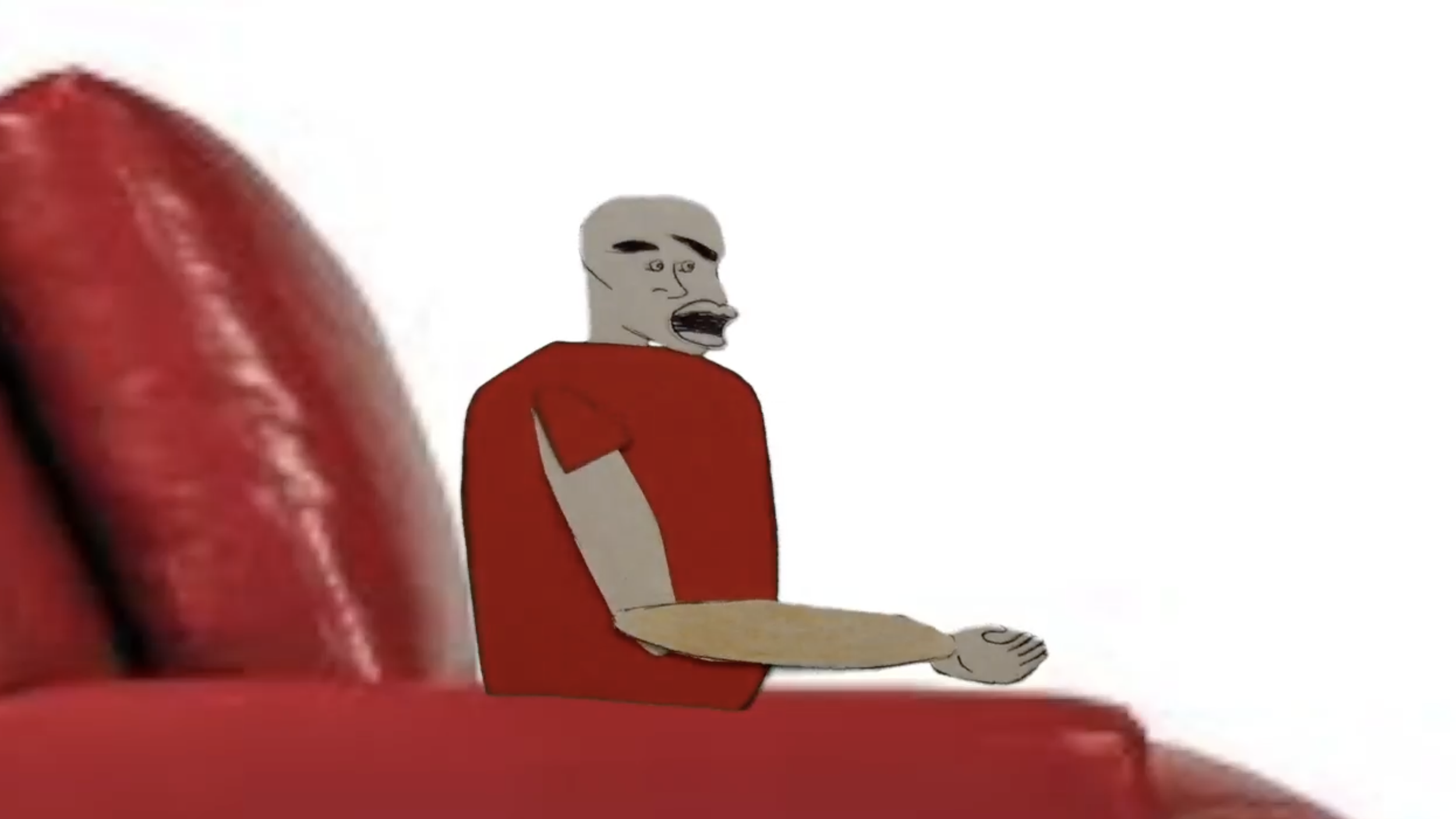
A selection of past Films For Friends posters:
FFF 1 Poster, Art by Theo Baransky
FFF 9 Poster, Art by Theo Baransky
FFF 8 Poster, Art by Sean Bodine
FFF 5 Poster, Art by Jeff Bill
FFF 14 Poster, Art by Mick McDonough
FFF 13 Poster, Art by Theo Baransky
FFF 10, Art by Katie House
FFF 15 Poster, Art by Mick McDonough
FFF 19 Poster, Art by Alex Ocampo
FFF 11 Poster, Art by Karyn Tettemer
FFF 12, Art by Bernadette Simone
FFF 16, Art by David J. Weinhol
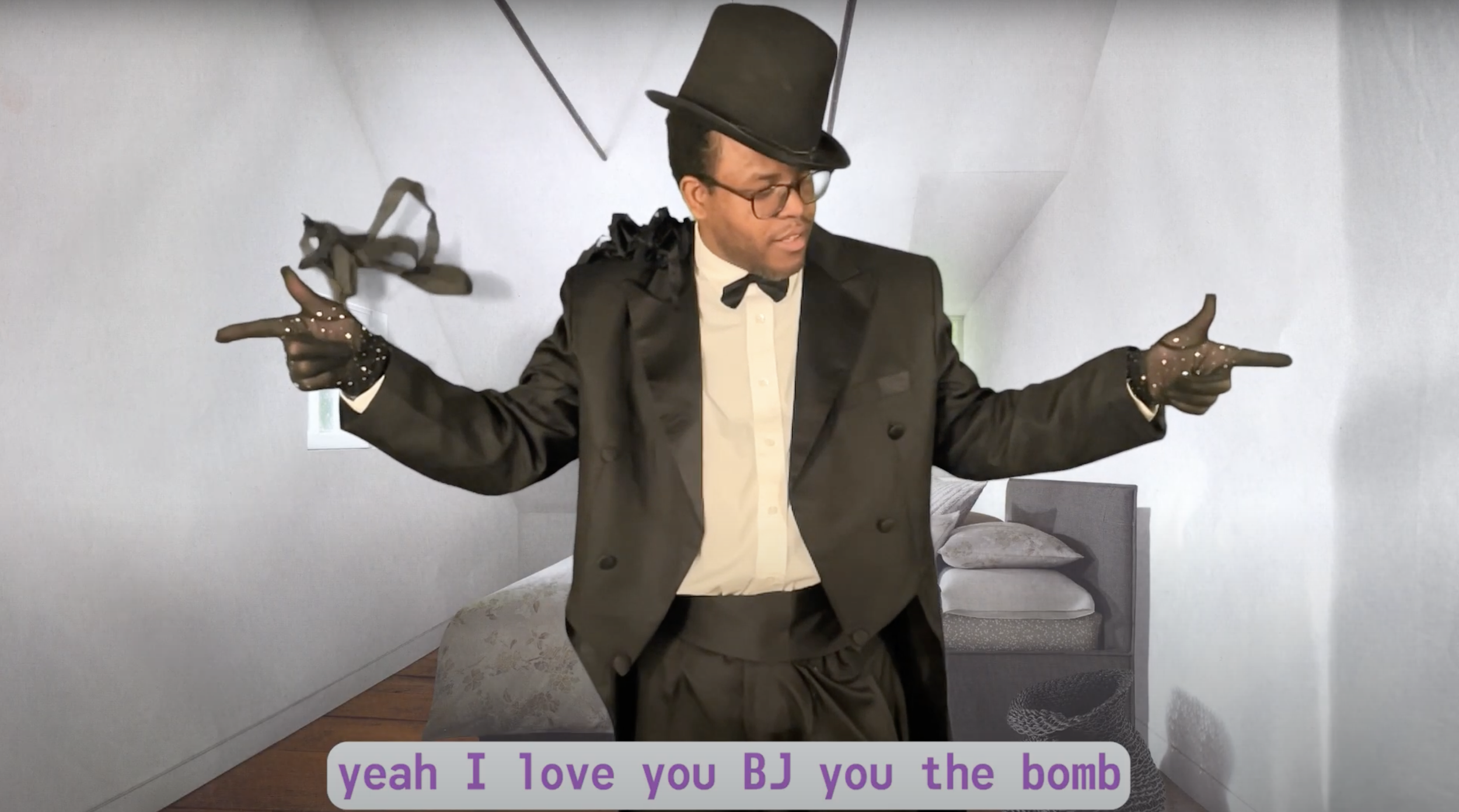
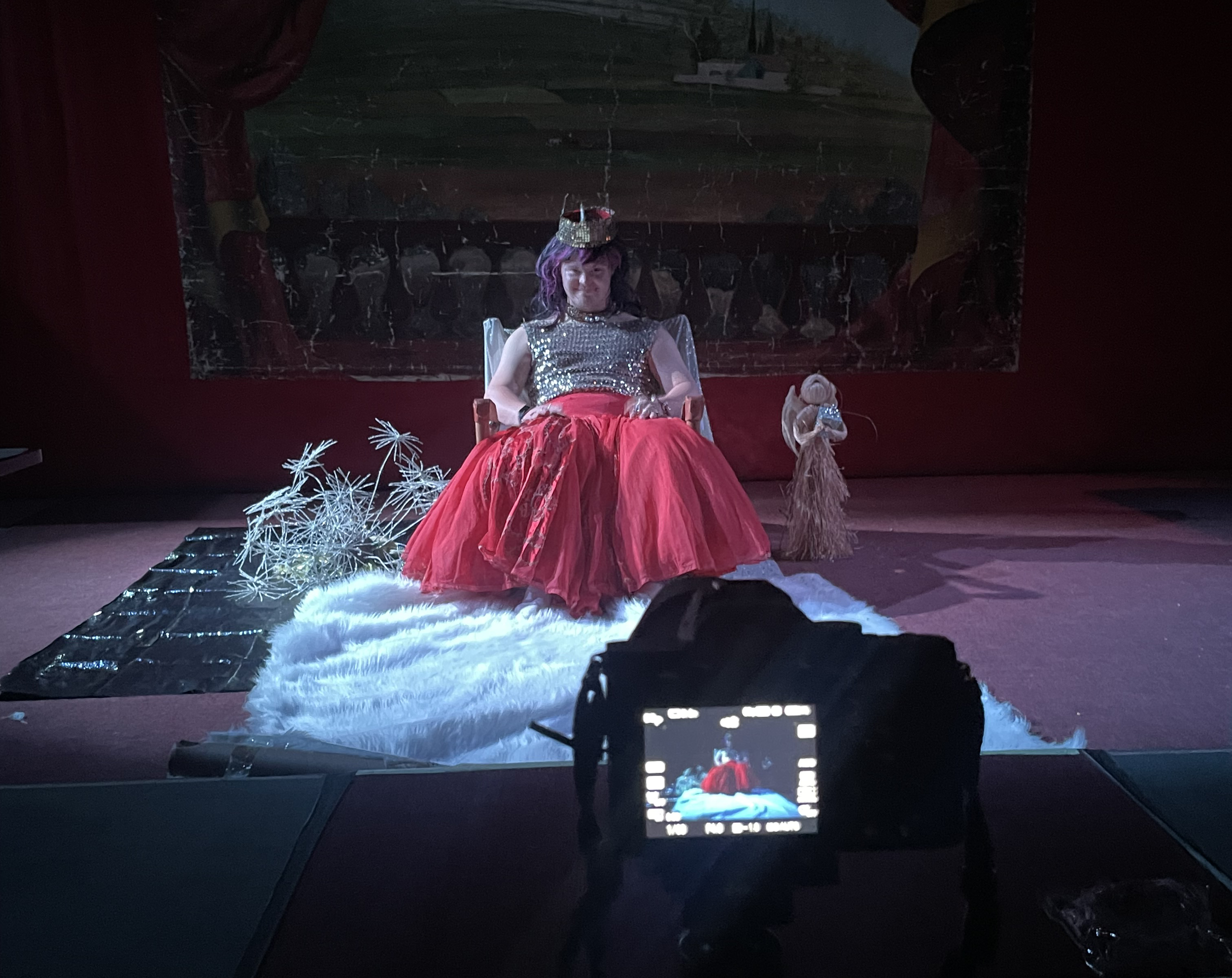
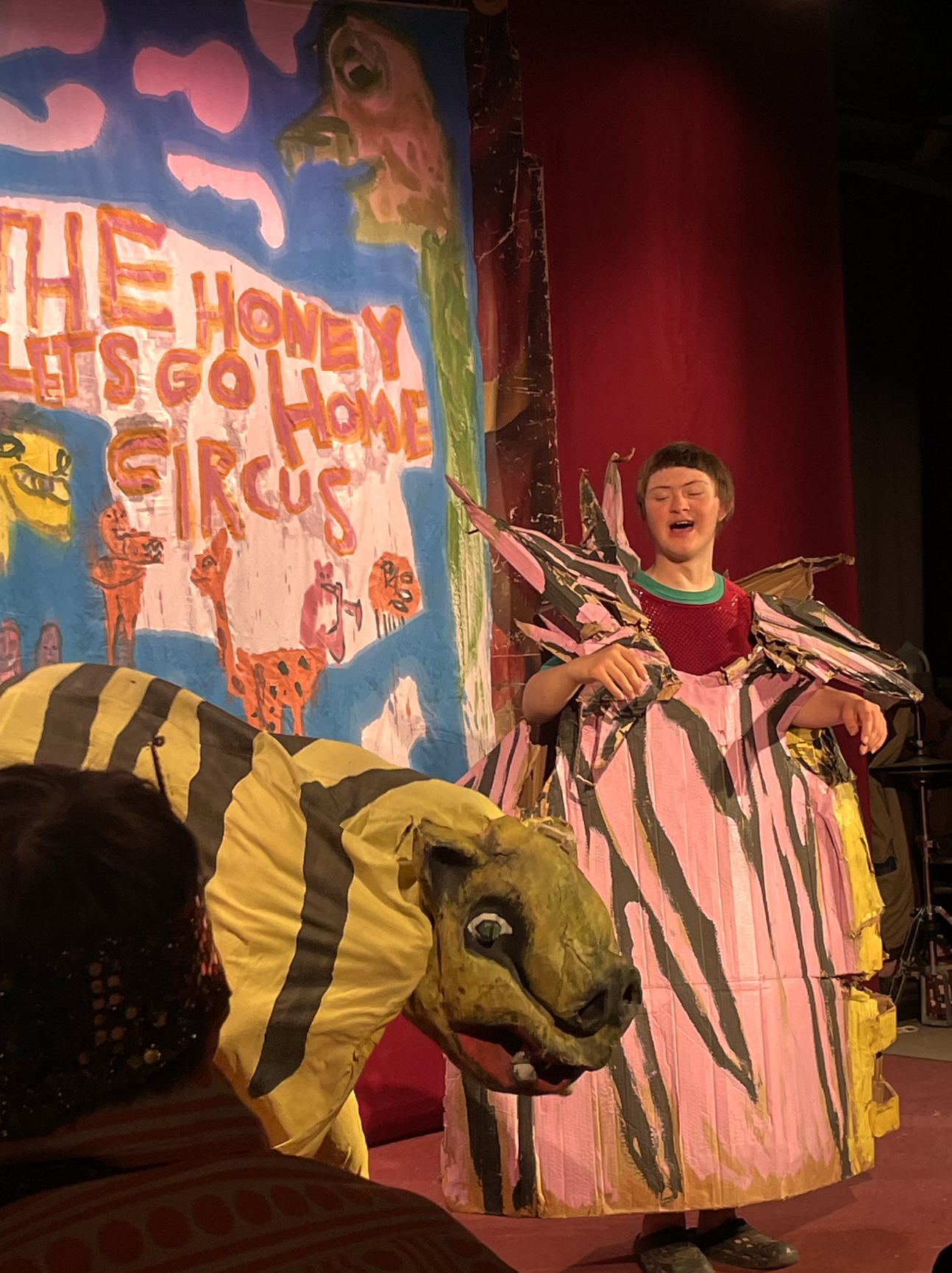
“FFF is important to show works that don’t fit into the traditional gallery structure--music, poetry, performance, music videos, original songs, and more,” says Hop.
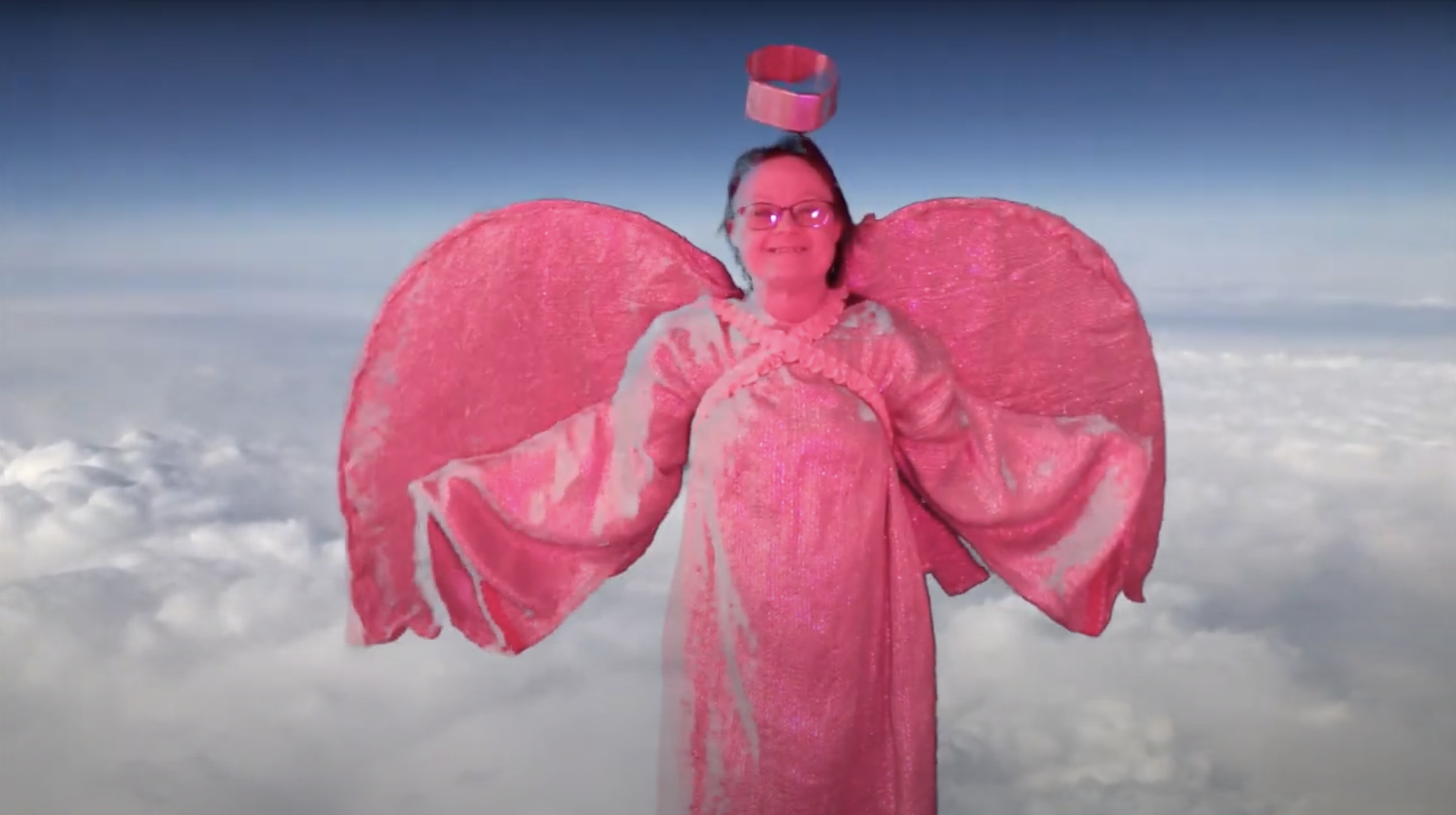
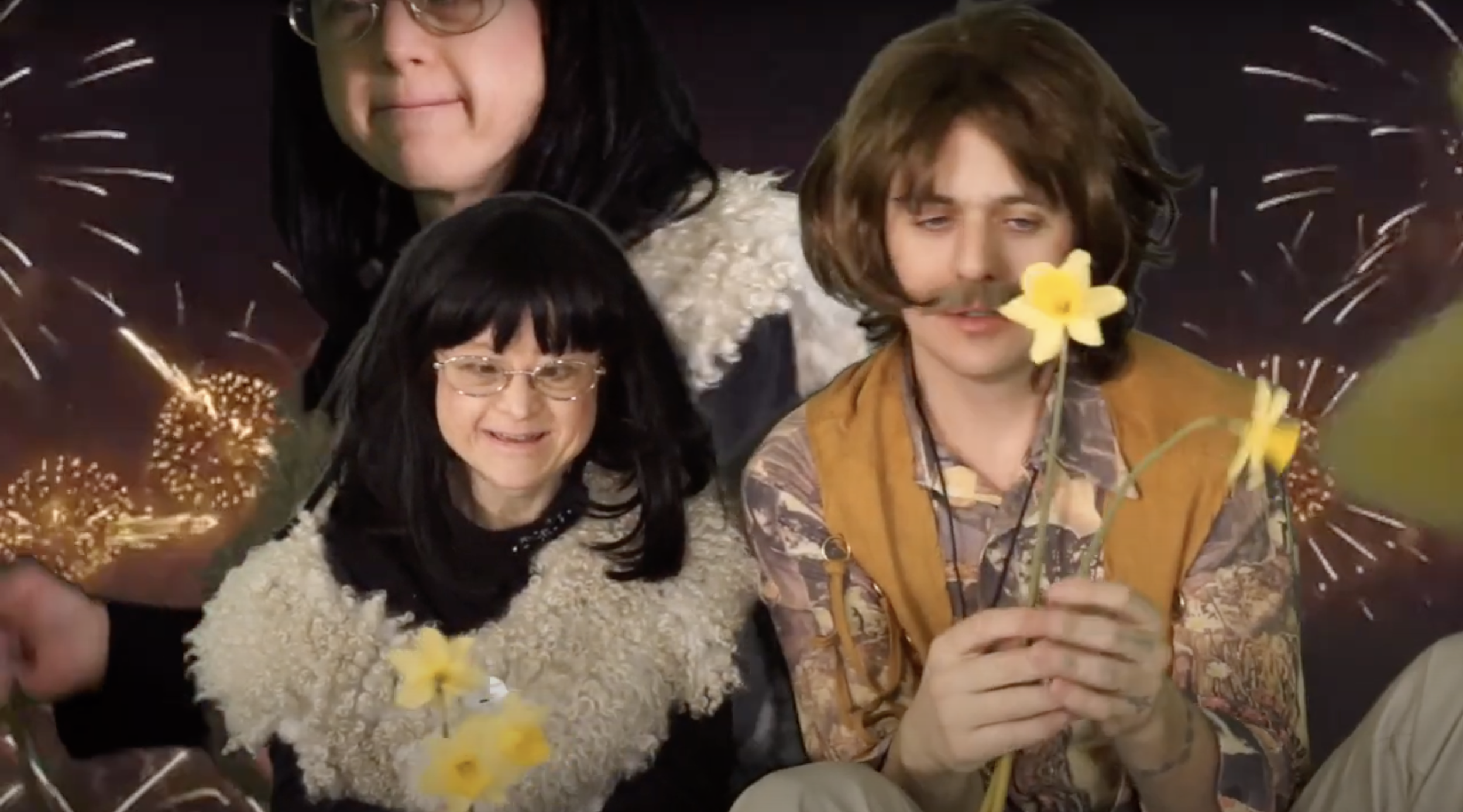
Films for Friends typically revolves around a theme chosen by the studio. A recent comedy night included films, animation and--when one performer was running behind--an impromptu stand-up comedy routine by Theo.
“There’s a spontaneity to Films for Friends,” Hop says. “The activities are organic and interactive.”
Studio Route 29 has also opened up opportunities for Theo to record interviews with people in the film industry and screen them at FFF. He recently spoke with producer William Horberg, and screened the interview alongside Horberg’s recent film Ezra, a comedy and drama about the relationship between a father and his autistic son.
Theo also spoke with Jim Lebrecht, a long time artist, activist, and the co-director of Crip Camp, a documentary about a summer camp for disabled youth that helped spawn the disabled rights movement.
Hop says FFF has become central to Studio Route 29’s vision: a showcase of creativity and togetherness. “It’s how we want to be understood by the broader community”.
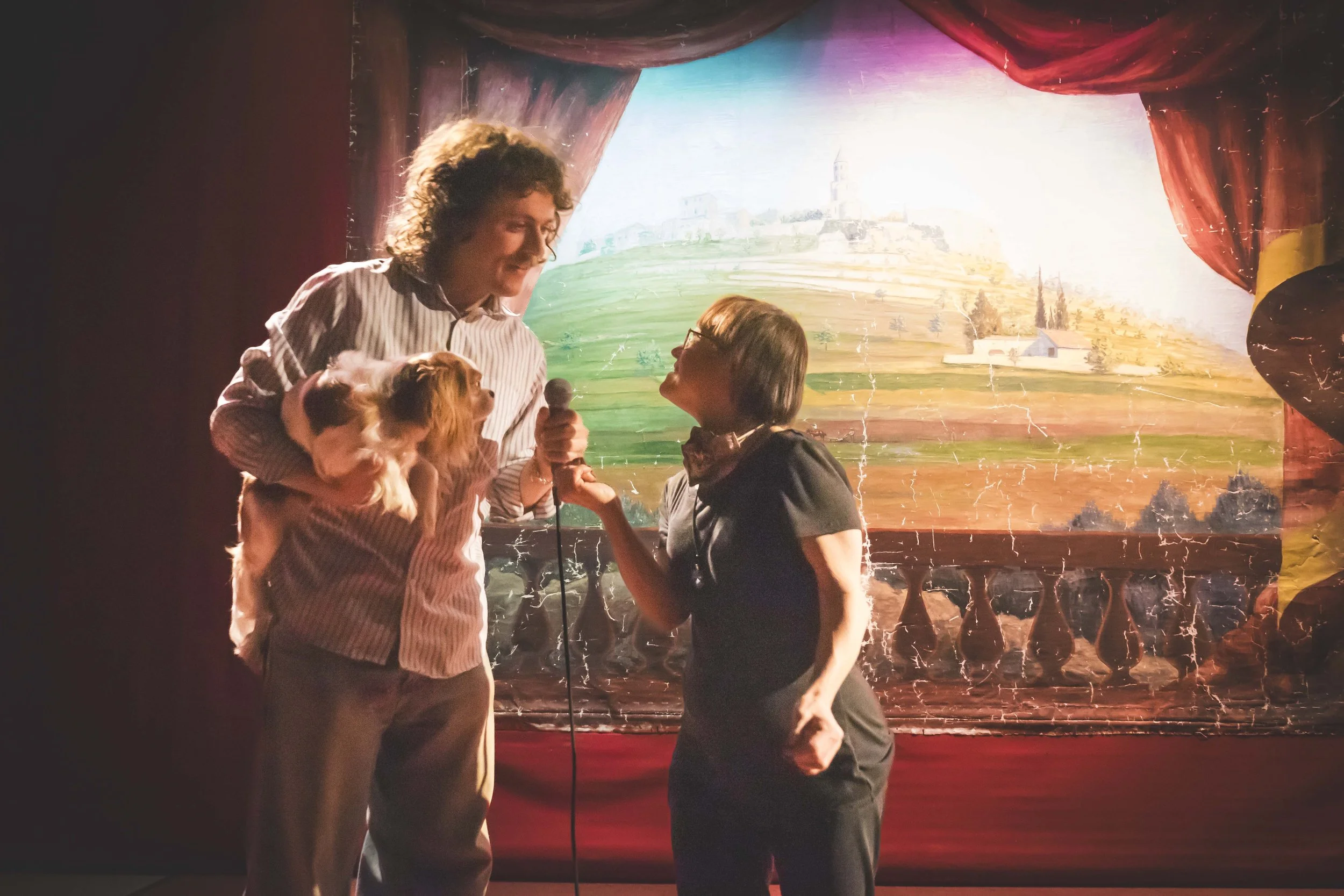
Hop Peternell, Ernest, and Karyn Tettmer onstage at FFF16
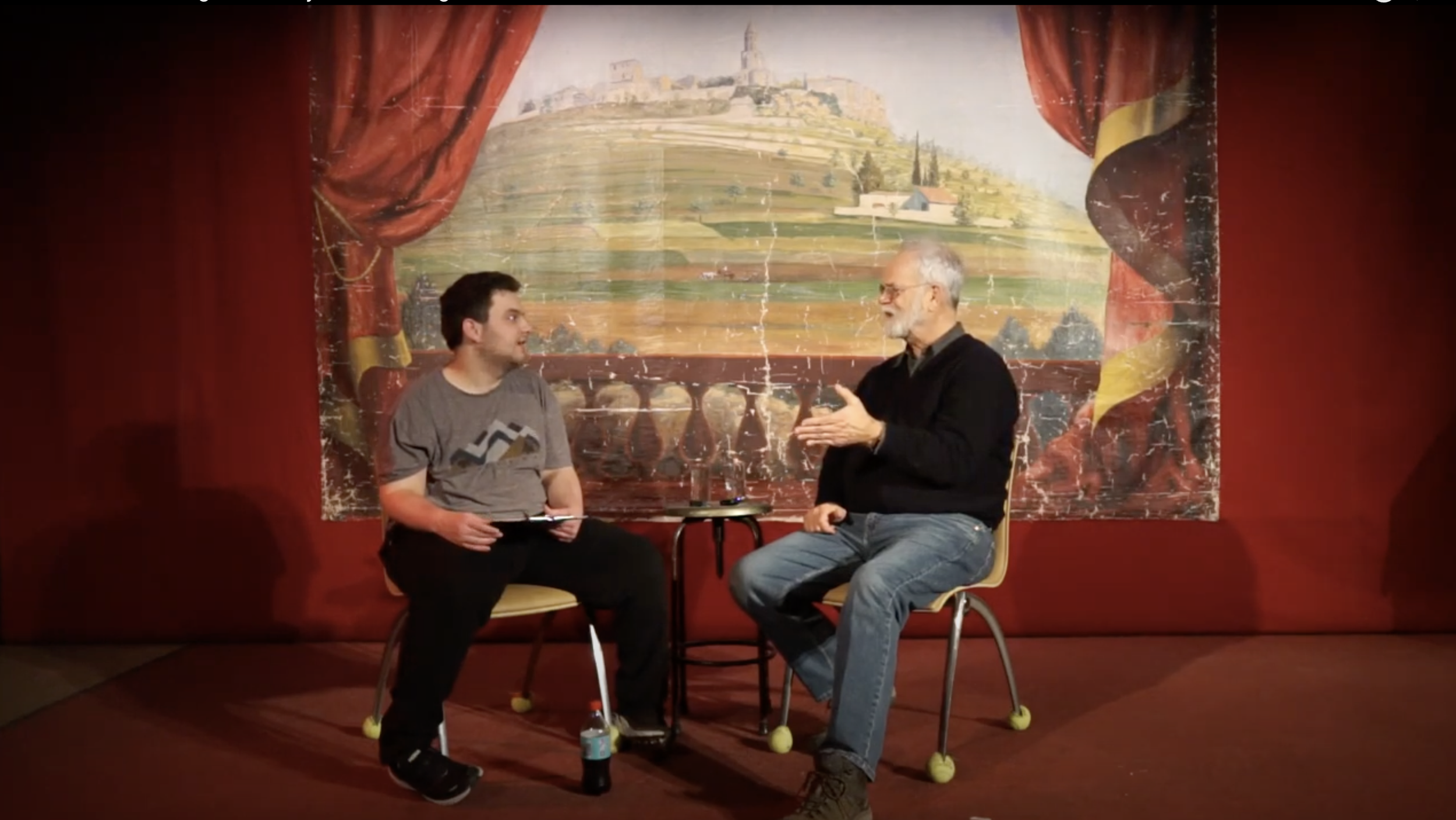
Theo Baranksy interviewing Douglas Murray
ER: Tell me about how you two choose the artists you want to be working with, what that looks like for you.
IC: So, there are some constraints to the space. All the exhibitions have been unique, we’ve shown various mediums. I think we surprised ourselves with what we were able to accomplish in this space. I also think what emerged for us was the importance of being women co founded, of wanting to show more women artists, nonbinary artists, in such a historically male dominated industry.
That felt important, and something that we wanted to be designing for. We also wanted to work with artists who would be interested in collaborations. I think about the network effect a lot. We’ve been doing solo shows, though we’d be open to a group show; it just happened to be right to be able to give the artists that solo time. Group shows could bring in more visitors because each artist has friends that want to come, or their networks that they blast out to. It’s nice that the artists have been open to being paired with writers for exhibition statements; even though our space is small, there are other ways we can work with other creatives. That led to — who’s the graphic designer, who’s working with us there. We’re proud of our website and documentation of the shows. Paperbeatsscissors is the designer, and Jenna [Garrett] took the photos; they gave a lot of their time and energy. The artists have the photos to use to get their work more out in the world. The website or Instagram is the first place for people who haven't visited before. That’s really important — those are places where our strong point of view comes through.
‘DRAWINGS’ exhibition / Artist Barbara Stauffacher Solomon
IC: There is something very unique to the staircase itself. The artists responding to the architecture, the way that people react to it — there are more ways to show artwork than I think, initially, one would imagine. It’s also a sort of social experiment: people typically walk up the stairs, and they look forward, and then on their way back, they see whatever they see on the way down — it’s that out-and-back sort of trail. You might miss something if you don't turn around, but you have to, to exit. I think from an experience design standpoint, it's pretty interesting. Having the skylight — there's not a square foot or a piece of this staircase that we haven't thought about utilizing. The space became bigger than we initially thought when we imagined a gallery in a stairwell.
ER: I'm fascinated by the possibilities for an art space that is right there in conjunction with living spaces. It feels like there are two sides to it. I'm curious how you see that it impacts the way people perceive the art, and I'm also curious how you think about it, now that you live in the context of this space — you created it, and you live in it.
LA: It's a running joke with my family, that I want to live in a museum, so we kind of made that happen in a way. I find myself getting emotionally invested in the work, specifically the exhibition with Barbara Stauffacher Solomon. Her passing during the run of the exhibition was emotional for me. I had worked with her on previous projects, so I had a long standing relationship with her. It hits you — and then living with the work afterward was like a memorial that I got to interact with daily. She had a self-portrait in the show. Just seeing it, it is like, Barbara is present with us. For me — this is why I work in the arts, I want to have this work live on and impact people.
LA: How people perceive the space, coming in, being so close — I think there is surprise, a shock, when people walk in. They're like, Whoa, this is not what I expected. And then also their curiosity, where people want more, so they feel inclined to open one of the doors and then they say, Oh, this is it? I have to explain, I live here, and then they say, Whoa, that's so cool.
LA: I like the size and the scale of it. I like that it's solo shows, because we really get to highlight that person and their work. Group shows are great. I like them, too, but I feel like this is an opportunity for people to showcase themselves, in this spot, in this smaller, intimate, less intimidating kind of space.
ER: I would imagine you're choosing to work with artists whose work you enjoy, or are intrigued by in some capacity. Thinking about you living right there — I'm curious if there's ever been any artwork you've installed that maybe surprised you every time you saw it. I'm curious to hear the range of how it feels to be living with all the different kinds of artworks.
‘some gamut’ exhibition / Artist Laura Figa
LA: Some shows have a quietude to them. I’m thinking specifically of the first show, with Laura Figa, and the fourth exhibition, with Léonie Guyer. Their work is very meditative and cerebral. There's a quietness to it, a reflection, and so that for me — having an opening with Laura’s show was lovely. Because it was also right when I was starting my new job, so it was an intense time, but coming in every day, there was this calming effect.
LA: Our first sound piece and video piece was with tuğçe evirgen özmen. She composed the sound and video. We initially had a subwoofer in the space. But it was too loud. The whole staircase was rattling. This was during install. We're like, Okay, we'll just have these speakers, but also have a built-in subwoofer, but tuğçe wanted the volume at, like, 54 when she was here. Sometimes Ivana and I will shut the door to work from the kitchen because you can hear when the door opens and people come in, but there would be sounds in there. Like when it gets to this ominous spot. It's like —[DUH DUHM]— and you're like, Oh! So that one was shocking.
LA: It made us think more about how the space can be so varied. There's so much possibility for the artists to do whatever they want. When we pick the artists — everyone that has shown here, we've known, we have a personal relationship with. We did that specifically for the first year because it is such an experimental space, and it's also my home. So, it had to be someone that Ivana and I both trusted. Because we said, here's the space, this is the budget that we have, you have the flexibility to do what you want. tuğçe took that to the next level — we blacked out the lights, we had the sound, we borrowed a 4K projector, and we were able to showcase the work in a very professional manner. I think people were impressed by that — you walk into darkness, you ascend the stairs, you see this light, and then you hear all of the sound.
Installation shot of ‘mirror remembers’ exhibition / Artist tuğçe evirgen özmen
‘mirror remembers’ exhibition / Artist tuğçe evirgen özmen
ER: I read Rita Bullwinkel’s essay about Léonie Guyer’s work and I find it so interesting to hear the history of the building, and to think about the people who have moved through the spaces. It feels so different for a gallery type of space. Buildings have histories, so even a white box gallery space has some kind of history, but this is a building with a very personal kind of history. I’m curious how you think about that.
LA: Rita is a dear friend, and her essay moves me so much — she's the third generation to live in this space, and her daughter was born here, so it’s going into the fourth generation — I feel lucky and also honored to be a part of this space. I'm doing this with my best friend, having her here. So the artists that we pick are part of that — like Léonie, for example, is an artist who is beloved to all three of us collectively.
LA: Léonie came to Laura’s show and said, I feel this urge to do a wall painting. We said, Okay, yes, let's do that. I felt like, It needs to live here forever. So the spirit of staircase and your presence will live here forever — kind of like the history of the Jay DeFeo work living behind the wall at SFAI. I had just finished reading Rip Tales, that Jordan Stein had written about Jay DeFeo, and — I feel like the history of this building being so personal to a dear friend, and having the work live on as this ghost, is just something that I felt was important, that we needed to do. It’s the same now with Barbara Stauffacher Solomon’s stairs, with her passing — we're going to keep the stairs her vermilion color, and then that will be a permanent art piece, and the same with Léonie’s painting up at the top. If we move on from this space, maybe they paint over it, maybe they don't. But the idea of its skin, that layer still being there, is something that was important to us.
Wall painting by Artist Léonie Guyer / ‘conclave’ exhibition
Vermilion staircase at Barbara Stauffacher Solomon’s exhibition ‘DRAWINGS’ / photo by Eva Rogers
ER: There are a lot of experiences of art where we're in a kind of sanitized environment, or a very controlled environment — and then there is the experience of seeing an artist’s studio, which — you’re right there, in the place where the art emerged. I’m interested in how staircase feels like a bit of an in-between space.
LA: It absolutely is, especially when we think about rel robinson’s show [rel lives in the apartment next to Lindsay’s — her studio is also in her home]. It flowed with rel like — Now we're going to showcase it here in this quote-unquote gallery space that's right outside your house. It was also a bonus because — you live so close to this exhibition space, you're able to come out and test things. Or again with Léonie, I gave her the keys because Ivana and I had to go to work. She just spent days in the space to figure out where the piece was going to go, just sitting here, seeing where the light would fall. The space lends itself to being a gallery-slash-studio space.
ER: I'm thinking of the idea of the door separating the studio and the gallery. Now I'm in the gallery space, now I'm in a private studio space. It's interesting to think about how in a lot of ways, and maybe in a lot of places, there's this desire for more and more space — where people think things happen in larger spaces. This is a small and focused space, it's an intimate space. That feels tied to what it means for artists to come in and find their connection with the space.
LA: It's layered. It feels a little bit like a residency — residencies that have you present something at the end or maybe a project comes to fruition. Because it's like, here are the keys, here you go, this space is yours. We're here as a resource to bounce ideas off of, obviously; we help financially, and physically with the install, but try to have the idea fully come from the artists to give them that freedom. We really want it to be an experimental place for these artists to dream up whatever they want.
‘My Roman Empire’ exhibition / Artist rel robinson
ER: You’ve noted that staircase is not a full time project for either of you. And I would imagine that gives you some flexibility in terms of how you work. I’m curious if there are interplays with other galleries in the Bay Area. It’s interesting to me that you’ve formed what feels like more of a flexible creative space within the gallery construct or concept. I’m curious how that plays out for you in communication or in circles with other galleries.
IC: It was super cool — when we opened, at the same time, In Concert and House of Seiko opened in San Francisco, and then a little bit later, Personal Space opened in Vallejo. It felt supportive to know that other people were also opening new things, that there was a market and interest for that. I believe it to be true that it's this idea of testing, you don't need to have an original idea — people out there doing the same thing are validating that it is of interest, right? And so — those spaces opening up at that time as well — they're doing something, we're doing something.
ER: It feels like this underlying goal of making sure that the arts can continue to thrive in a place like San Francisco and the Bay Area.
IC: I think that was very much felt at the San Francisco Art Fair, where it was our booth on the corner, Personal Space next to us, and then House of Seiko next to them. We’re like, this is the block party, this is the most fun in this whole big space in Fort Mason. I hope that spirit continues.
LA: I liked the idea of being this nontraditional space. I felt like — this is the future.
‘conclave’ exhibition / Artist Léonie Guyer
ER: It feels like it comes back around to a hunger for what people are creating, and want to be creating, together. Rather than just like — here's our job and what our job says we're supposed to be making. Actually, we want to make things together.
LA: I went to school for art and gave up my path of being a photographer to be an arts administrator, but I view staircase as an art project. For me, personally speaking, it's been really great to have this creative outlet. Aside from my job.
ER: Can you say more about how you think about curating and how you think about the nature of staircase being a thing you're making?
LA: I studied art history and then photography, and I thought that I was going to be a photographer. That was my life goal. But then it was like, Oh, I need to make money. So then I fell into arts administration, and started to love that. Then I was in development. But that didn't feel right, for me.
LA: But I loved SECA, because I got to meet all of these artists and do these deep dive studio visits, and then have these deep conversations about the art practice. I thought, Okay, this resonates with me, I want to explore this more. I also fell into exhibition design. I have a
hard time saying curator because I didn't get a PhD in art history — I organize shows.
LA: I feel like it's that personal time that happens a lot in the studio with the artists when we're looking at work, and then having conversations like, What are you reading now? What are you listening to? I observe how the artists are moving in the space or how they're hanging their work in their own personal space. Then I think about that when they come to staircase and we're having a walk-through. When we're talking about layout and ideas, I try to bring in some of those personal elements that I experienced when I was in their personal space. That's my own approach to how I think about, specifically, hanging shows — but it's very much a conversation. For me, curating and producing these shows is very intuitive. Of course, we'll hash out an idea. But you can come up with an idea of how you want to show the layout, but until you're physically in the space, seeing it — that's where all the magic happens, everything is going to move around.
Photos by Jenna Garrett jenna-garrett.com
Find Eva at @rogevarog / evarogers.com
Visit staircase.placeto learn more and see what’s coming next.
Follow at @staircase__series