Inside Outside Forces
An interview with Marissa Long, Gallery Director & Curator at Art Enables
by Monica Fernandez Zuñiga
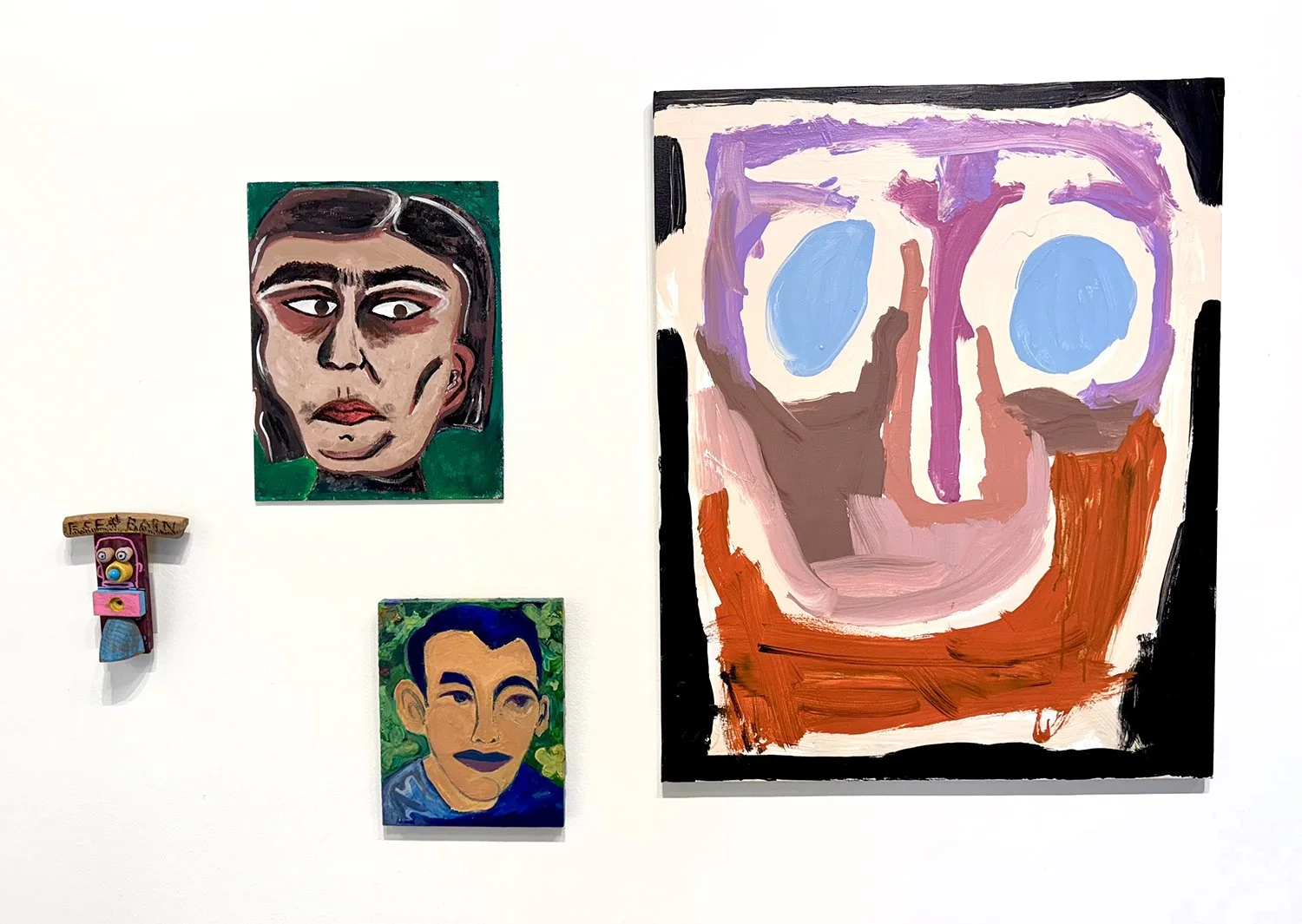
Artwork from Outside Forces, 2024
Art is a funny thing. It’s all around us, yet it can feel as unfamiliar and distant as a county you may have never stepped foot in. It can compel you to tears without knowing why, thrust you from feeling alone to fully understood - embraced even. It can completely envelop you in a pure sense of joy through a title that smirks at you as if the juiciest little secret was just revealed. If you are fortunate enough to be jolted by it, art can stare right back at you, perhaps asking the questions we don’t dare ask ourselves. Art, while I am not here to define, is everywhere because we are everywhere. The collective ‘we’ includes the diversity of communities and the spectrum of nuance within each one - however, artistsare the ones with the insatiable need or desire to express what it feels like to live this life, and we intersect within those experiences by default. Whether trained or untrained, anointed with degrees or self actualized, the people with courage enough to wear their heart on their sleeves are the artists that remind us to feel the breath of our humanity. And the most beautiful truth of that is, when artists paint, draw, sculpt, knit, or photograph, they make sense of the world around us, choosing to run toward vulnerability rather than against it. In my book, there is no more courageous act. To understand who we are, where we stand and why we find ourselves where we are at this point in time - we have to dream, experience joy, heal from pain, forge through anger and sometimes find resolve. The art all around us are trickles of these gargantuan efforts - symbolizing far more than the experience of any one person. Any one artist.
So who are the artists that color our world, remind us to notice the awe in the little things and empower us to emerge from the clouds - tangerine colored and otherwise? How do we find artists in the wild, and who has the magnetic vision of bringing them together so that we the people can reap the rewards?
Earlier this summer, I had the distinct pleasure of meeting Marissa Long, Gallery Director & Curator at the D.C-based Art Enables - a progressive studio and gallery supporting the creative and professional growth of artists with disabilities. I caught her in the throes of preparing Art Enables’ largest annual exhibition, Outside Forces. Celebrating its 20th year, the national exhibit has been a vital force in spotlighting the expansive work of untraditional artists, significantly representing self-taught artists working in progressive studios across the country. Their work cuts through the noise and hierarchical standards of the traditional art world and intently uplifts the soulful nature of what art is, who indeed makes it and how the very process of being present with one another opens the door to true collaboration and sparks a welcome side effect; a need for each other. There is no better way to learn about a refreshingly honest contrast to the traditional art world, than to hear from Marissa herself.
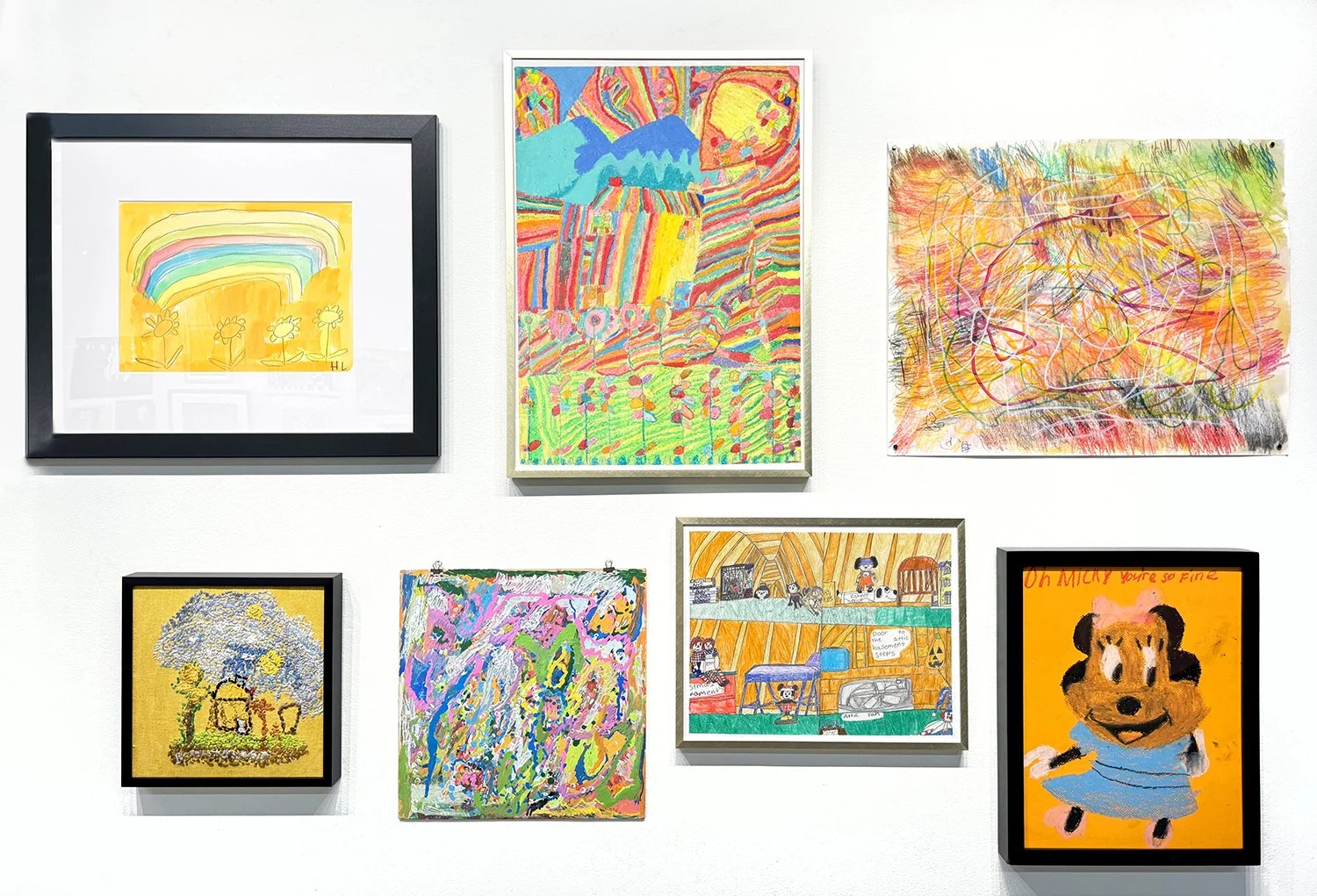
Artwork from Outside Forces, 2024
Monica: How does Art Enables distinguish between self-taught and outsider art?
Marissa: In the exhibition text, we try to acknowledge that “Outsider Art” is an evolving and imperfect term. The popularity of Outsider Art has grown pretty dramatically, but some people dislike the label and find it derogatory or exclusionary. Also, in its purest form, outsider art is made by people who truly have no connection to the wider art world at all. That’s a bit harder to achieve today with the ever-invasive specter of the internet, and those people are probably not seeing our calls for submission. Many of the artists in this show are artists with disabilities from studios like ours. These artists work alongside each other and collaborate, they’ve been to galleries, they’re thankfully not totally isolated. But they have for the most part developed their own styles outside traditional higher arts education. We use “self-taught” because it’s a wider umbrella that still very much captures the same spirit of work.
I don’t personally have strong feelings about the term, but when I came on board in 2020 and started thinking about it more, I changed the original title of the show from Outsider Art Inside the Beltway to Outside Forces. It still nods to the genre but also felt more inclusive and broadly empowering – these artists are forces to be reckoned with!
Monica: What resonates most with the audience of Outside Forces?
Marissa: Visitors to Outside Forces tend to be impressed with the breadth of the work. There are so many different styles, so many keenly observed details, social commentaries, and so much humor. I think there’s always a lot to surprise and delight viewers – even those who’ve been before and more or less know what to expect.
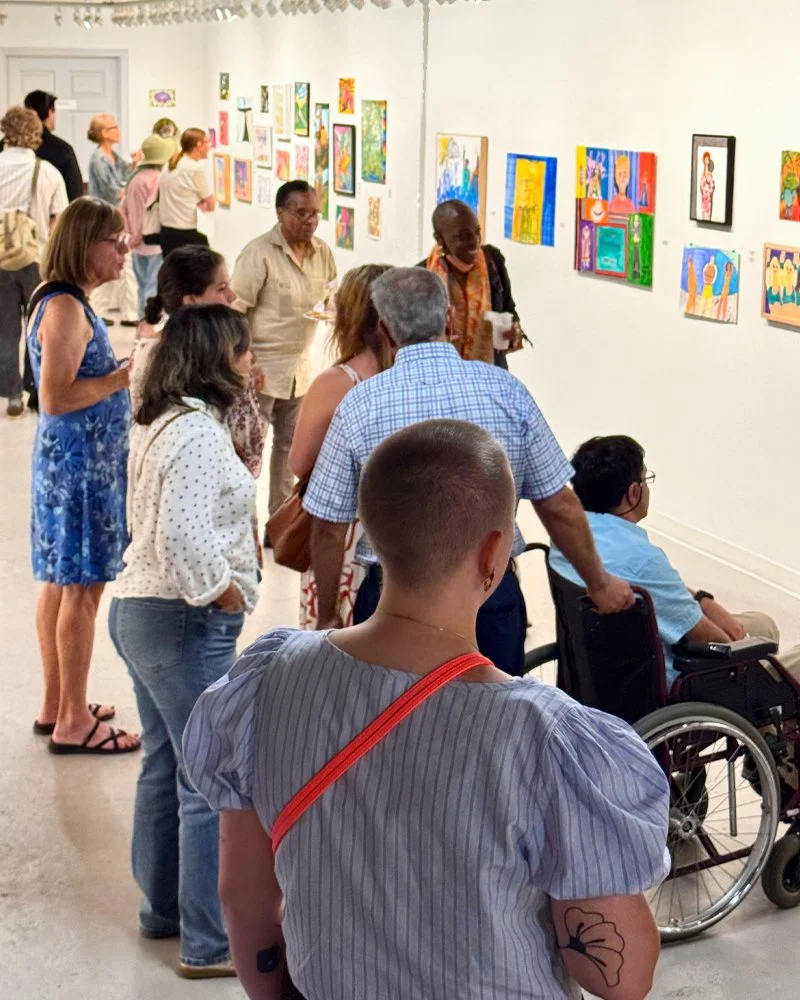
Outside Forces opening reception, 2025
Monica: How have these reflections shaped the evolution of the exhibit over the past 20 years? How is it different from the early years?
Marissa: I wasn’t here in the early days of the exhibition (20 years ago in 2006!), but I know it started as a way for local studios like ours to connect and exhibit together, and it’s grown from there to be an exhibition representing artists from around the country. The vast majority of the show is artists from other progressive studios like ours, but we also accept submissions from independent artists.
I think people had a big response to the show from the beginning and it was a driving force to keep it going – it became something we’re known for. It’s grown a lot over the years, to the point that it’s getting a little cumbersome to manage and fit everything in! That said, we still try to include as much work as possible. The show has always been focused on inclusivity and we often get to exhibit work by artists who don’t get a chance to show much elsewhere or are showing for the first time.
It's a lot of work organizing the show – but it’s also a gift to connect with so many artists and sister studios, to see so much diverse artwork. You can see that artists making work separately across the country are very much in conversation with each other. The show is a context for those conversations, and the connections strengthen the emerging field we’re in. It feels exciting, celebratory, and affirming.
Monica: Creatives working within constraints is a favorite topic of conversation for me. Given that Outside Forces is such a unique and essential platform for artists with disabilities, is Art Enables re-imagining how the exhibit is formatted? What tools or resources are you leaning on to make this happen?
Marissa: In terms of managing the volume of the show - it's a lot to corral, and it does get trickier as we get more submissions each year. I want the show to feel expansive, but not like a chaotic mess that detracts from or waters down the viewing experience. I may take a page from Make Studio’s book moving forward (they organize a similar show for progressive studios called Cordially Invited) and accept a little more work but show some of it online only – that would allow us to spotlight more than we can physically fit in the space. I lean a lot on documentation of exhibitions on our website to help share them with a wider audience.
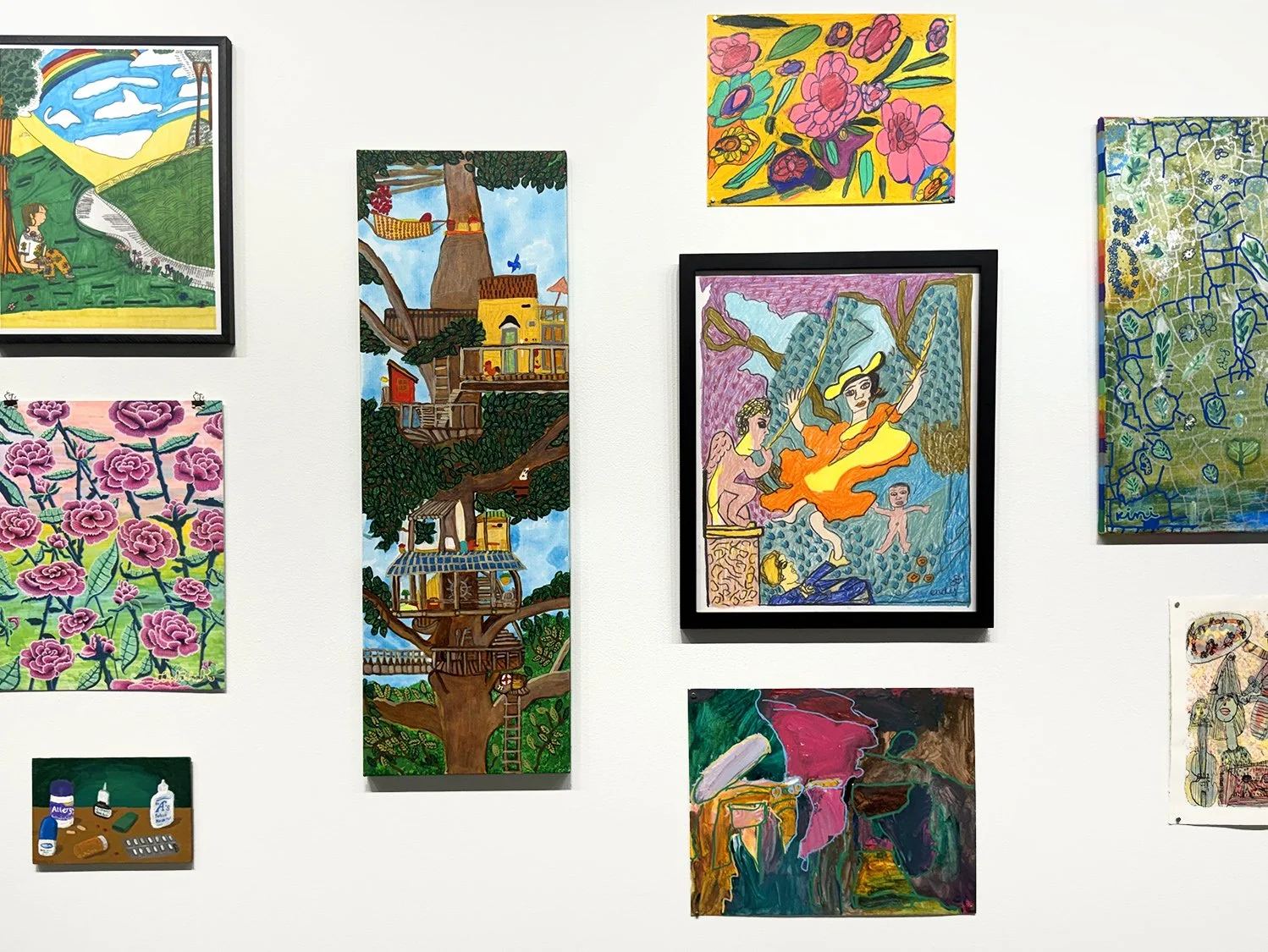
Artwork from Outside Forces, 2025
Monica:How does Art Enables approach "coaching" or "mentorship" with self-taught artists? How does your methodology as a supportive organization intersect with the creative process?
Marissa: We try to offer resources and introduce new media and processes to expand what the artists have available to them, but our goal here is to support the very real talent that the artists already have when they come to the studio. It’s their studio, not their school. Some visitors think we’re “teaching” the artists how to create, and that’s not the case. The artists come here with innate talent and their own unique perspectives. We can offer space and materials, community, feedback, and opportunities to connect and share their work with the public, but each artist’s style and vision is their own.
When offering feedback, we try to lead with questions and curiosity rather than imposing our own (likely less interesting) ideas onto what an artist is doing. We’re not here to try to make the Art Enables artists’ work more like other work that’s out in the world, to make it more traditional or recognizable – we want to help draw the attention of the world to this vibrant work that deserves its own place in the larger cultural conversation.
Each artist has their own goals as well and we try to provide whatever support can best serve those goals. The more the artists are empowered to invest in and take charge of their own work, the more we’re fulfilling our mission. As an organization, we’re striving to prioritize true collaboration with the artists more and more in all ways, including our approach to conceptualizing and curating exhibitions.
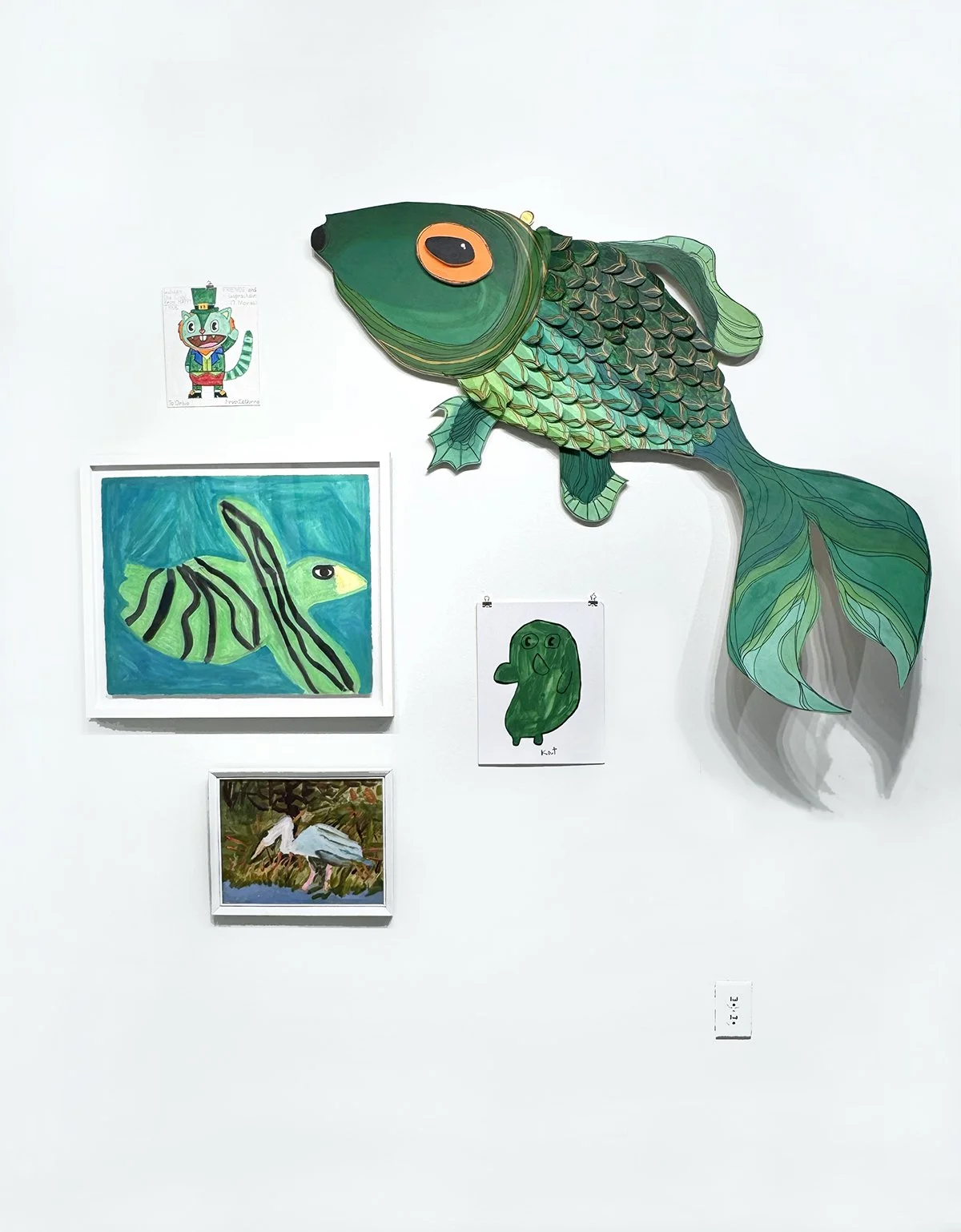
Artwork from Outside Forces, 2025
Monica: Adopting a multi-directional approach to mentorship really speaks to mutuality and the human need to be in community, contribute, and feel seen. In what ways do you see how vital this aspect of mentorship is in the studio - on a day to day?
Marissa: We’re very much a community learning from each other here – artists and staff. Multi-directional mentorship almost always makes whatever we’re working on stronger. As staff, our team works on growing our programs and policies after brainstorming together and also with artists. They’re the people we’re here for, and centering their thoughts and desires (rather than assuming we know what those are) helps Art Enables better serve the artists. We’re always trying to move more in that direction and be more intentional. Knowing that their ideas and opinions matter – it’s clear when that makes an artist (or a staff member) feel empowered, safe, inspired. Everyone should feel space and support around them to explore and grow as artists and community members. We do see artists really evolve their work and gain a lot of confidence here.
Personally, as our curator, I’m generating a lot of ideas for our exhibitions, and while those ideas always spring from our artists’ work, the more directly I can work with an artist, the richer the show gets. Having only my brain on the job can feel stagnant - especially when there are so many other diverse thinkers under one roof around me. With our existing schedule though, sometimes it’s hard to make that happen to the degree I want. We’re trying to build more time into the exhibition schedule throughout the year for working more closely with resident artists, visiting artists, and our staff on exhibitions over an extended period of time. We’re considering reducing the number of shows we have on site per year (which is currently between 10 – 12), so that we can work more deeply on them in partnership with our artists. I’m always trying to figure out ways I can get better at this – we all are. It requires pretty constant self-reflection and re-evaluation and sometimes altering long-standing structures and procedures.
Monica: What are some of the goals artists set out for themselves?
Marissa: Artists have a wide range of goals for themselves that we – our studio team in particular - work to document and act on. For example, some of our artists might be interested in making comics or books, some might like to try printmaking, some people might want to show their work a lot more at venues outside of Art Enables. Without asking, we’d miss a lot of opportunities to help explore those goals. We want to accommodate artists’ interests more specifically – something that, again, we try to be more intentional about as we go forward. Art Enables’ Studio Team is doing a lot of work to make this happen. Right now, the artists are learning about fiber art because the team discovered through speaking with the artists that many more were interested in this than we realized.
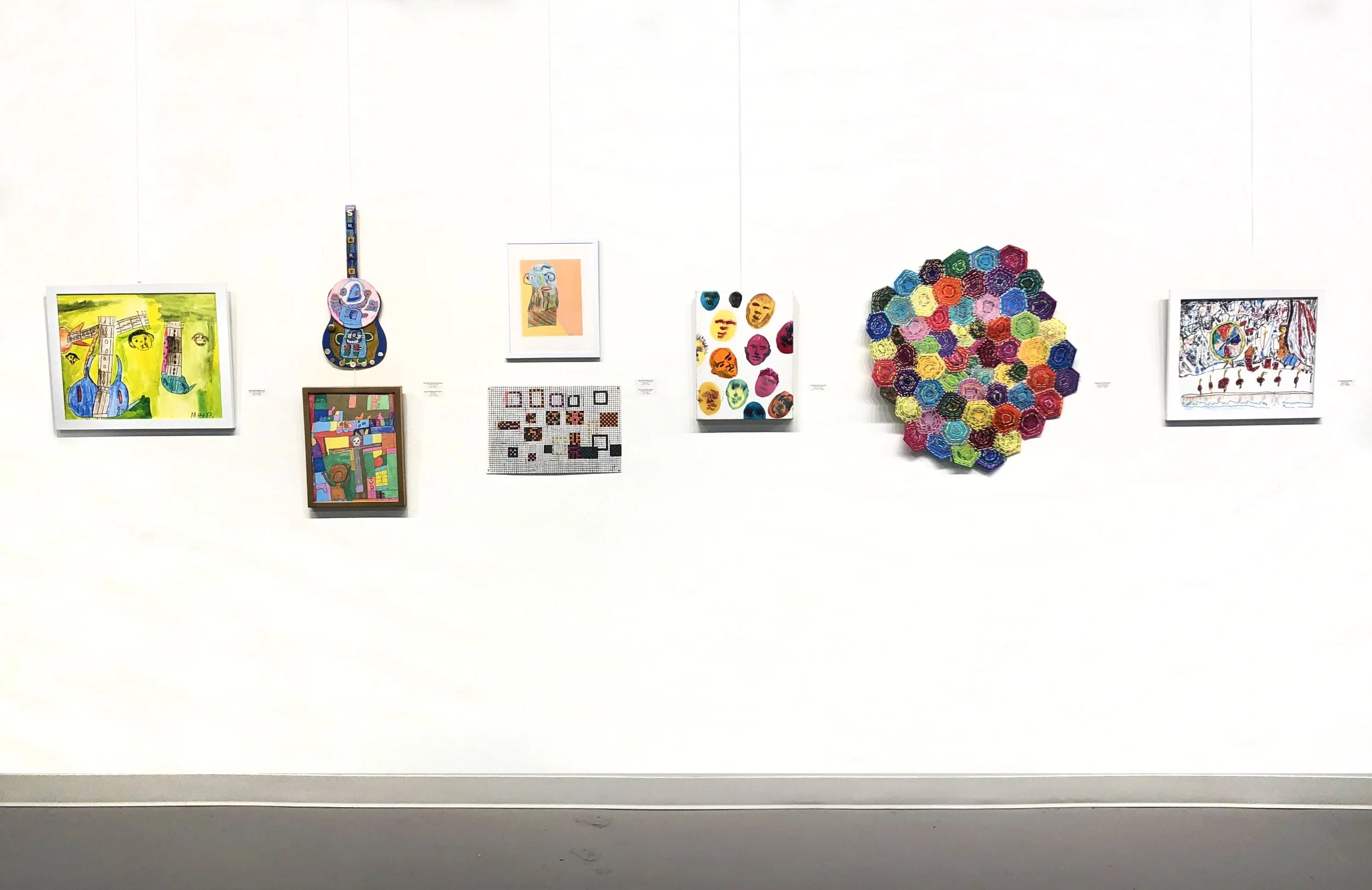
Artwork from Outside Forces, 2023
Monica: What do you want people to know about Art Enables that may surprise them?
Marissa: I mainly just want people to know how exciting these artists are. We’re a non-profit, we run on grants and donations and we work to provide opportunities for the artists that they may otherwise have less access to. That’s crucial, but also, if people view us only as a charitable organization, and think “Oh, that’s nice,” they’re missing most of what goes on here. The artists are awesome, they’re doing nuanced and surprising things. They inspire other artists and creative people out in the world in impactful ways (some of this is documented in our new book!)
I think people are often surprised to learn how many other progressive studios like Art Enables there are around the world, too. This is a relatively new field (the first progressive studio started in 1974) but a powerfully growing one. Artists with disabilities are increasingly infiltrating and helping shape the wider art world. These artists and the disability community in general have so much knowledge to share about creativity, labor, care, and community that would benefit everyone. These studios are not just day programs – they are radical spaces of creativity and social change.
Progressive studios are doing what art at large is meant to do: disrupt normative assumptions, question and expand our view of ourselves and the way society functions, what and who we deem valuable, systems we take for granted as standard that are actually broken and incomplete. So much of what people think is “different” about the work of artists with disabilities is actually just direct proof of the potential power of all art.
Monica: Can you share a particular artist's journey through the course of their history with Outside Forces? Where were they conceptually, creatively, personally, etc. in the beginning or in the time you have been there, and where are they now?
Marissa: There have been so many artists in this show that, to be honest, it’s hard to isolate just one in this way! I can say that I’ve seen many artists who are just starting out and may be exhibiting for the first time with us, who then continue to grow their practice and exhibit their work a lot more. I’m not saying Outside Forces gets the credit for that, but I am glad we can be a supportive venue for emerging artists. I love seeing artists we’ve exhibited here elsewhere out in the world.
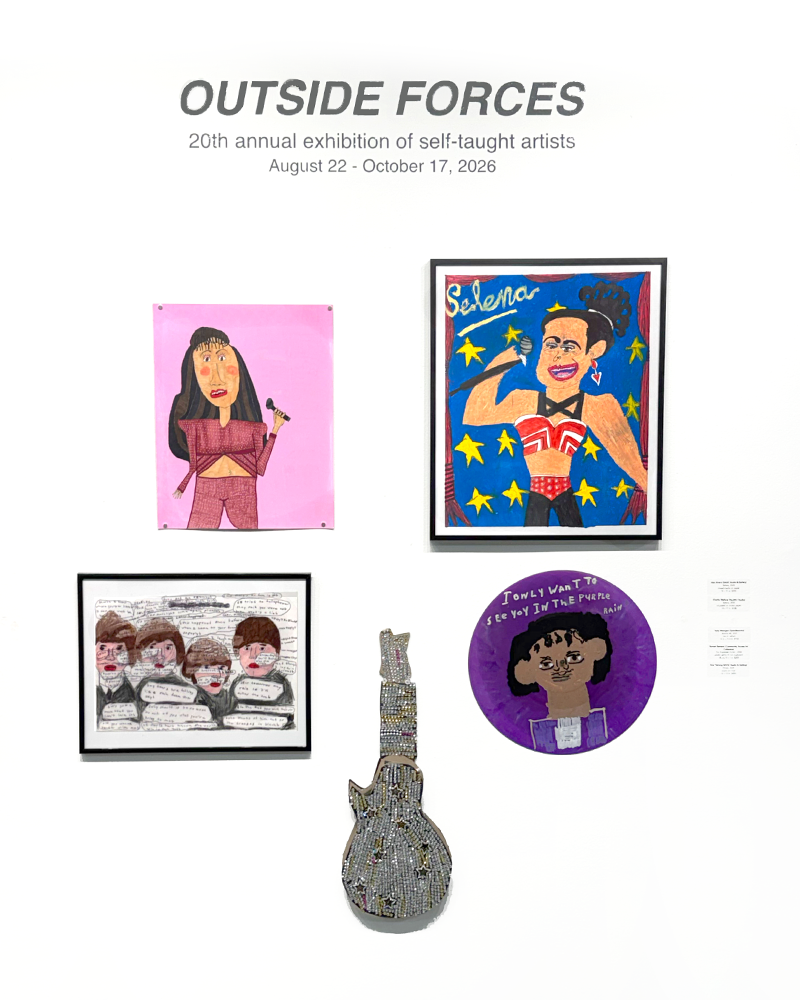
Artwork from Outside Forces, 2026
***
While we know the broader arts world has historically closed the doors on untraditional artists, often reducing their work to something other than Art, we have seen cracks open up since the 1970’s. Just a bit. From the Venice Biennale to niched art fairs and the coffee shop down the street, artists working from progressive studios have claimed their place in the very institutions and spaces that cast them aside. This widening of the door does signal a change in the tide, but like the power only an ocean can command, we the people need to participate, remain curious and take on our own humanity so we can swing those doors wide open. As Marissa tells us, these artists are a force to reckon with and that can only be a good thing. If you are lucky enough to see Outside Forces in person, take it in. Step inside the awe each artist brings, indulge in the story you find, and perhaps most importantly, make note of what you walk away with. Exhibitions like Outside Forces could just very well be windows into who we are and who we are becoming.
Article by Monica Fernandez Zuñigaof the QF Crew.
Monica is an independent arts administrator providing management services for artists, arts organizations, and creative entrepreneurs. Find her @artsplotter // artsplotter.com